
A female hair transplant in Albania may restore hair in selected areas affected by permanent thinning. However, not every woman experiencing hair loss is immediately suitable for surgery.
The cause of the hair loss, the condition of the donor area, scalp health, and future hair-loss risk must all be assessed before treatment is recommended.
The Short Answer: Suitability Depends On More Than Hair Loss
A suitable candidate normally has a clear area that requires restoration and enough healthy donor hair at the back or sides of the scalp. The hair-loss condition should also be stable enough for the medical team to plan a lasting and balanced result.
Women may be considered for transplantation when they have:
- A stable pattern of hair thinning
- Localized gaps around the frontal hairline
- A naturally high or uneven hairline
- Stable traction-related hair loss
- Hair loss caused by a healed injury or scar
- Sufficient healthy donor follicles
- A healthy scalp without active inflammation
- Realistic expectations about possible density
- Buona salute generale
- The ability to follow recovery instructions
The first step should always be an individual assessment. The team at Medical Tourism in Albania can review photographs and medical information before recommending an in-person scalp examination.
Learn more about female hair transplant in Albania.
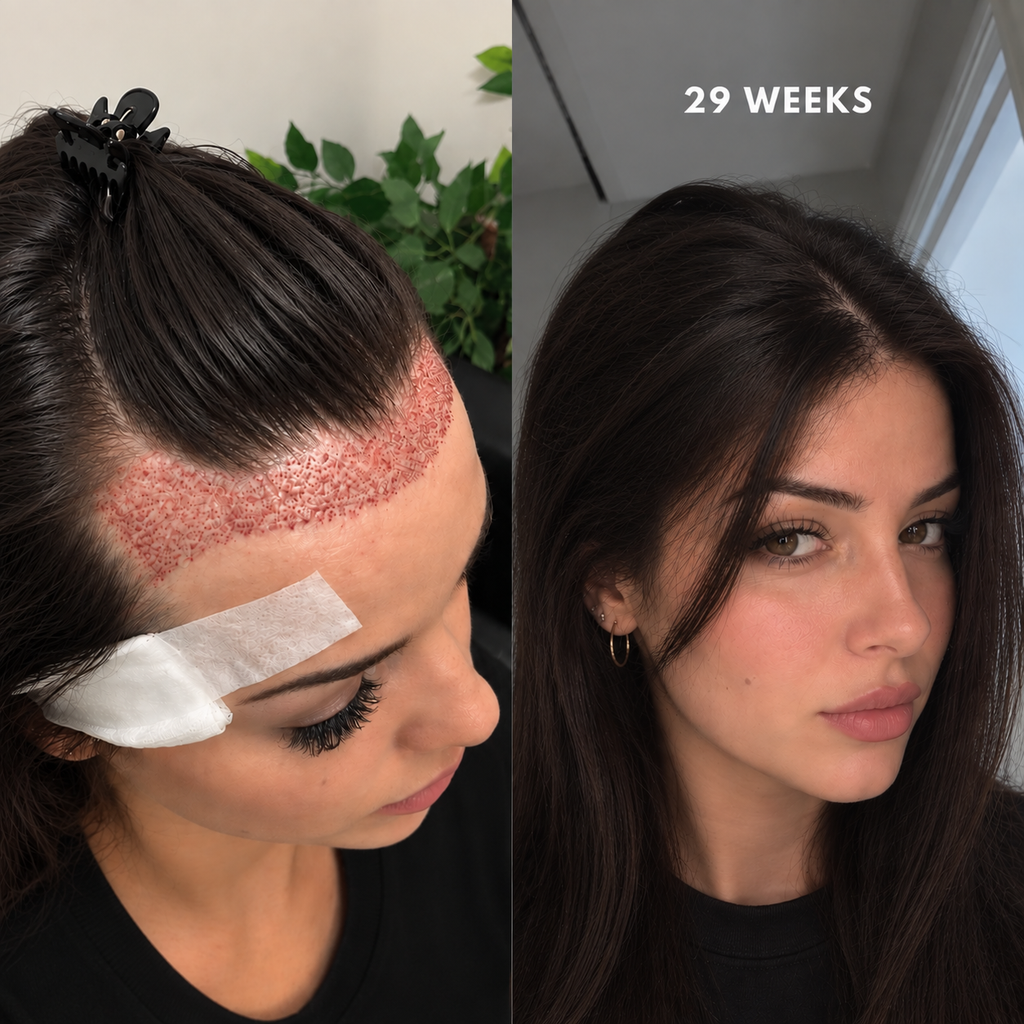
Why Female Hair Loss Requires Careful Assessment
Hair loss in women does not always follow the same pattern as male hair loss. Men often develop clearer areas of recession or baldness while maintaining a stronger donor area at the back of the scalp.
Women may experience thinning across a wider area. In some cases, the donor zone may also be affected by miniaturization.
This difference matters because a transplant does not create new follicles. It moves a limited number of existing follicles from the donor area to the area that needs more coverage.
If the donor hair is also thinning, moving it may not produce the expected improvement. A careful examination is therefore more important than simply counting the visible gaps.
The Cause Of Hair Loss Must Be Investigated First
A hair transplant changes the distribution of healthy follicles. It does not treat the medical or hormonal reason behind active hair loss.
Female hair shedding may be associated with:
- Genetic female pattern hair loss
- Cambiamenti ormonali
- Pregnancy or the period after childbirth
- Menopause
- Thyroid conditions
- Iron or nutritional deficiencies
- Significant weight loss
- Severe physical or emotional stress
- Certain medications
- Tight hairstyles or repeated traction
- Autoimmune conditions
- Inflammatory scalp conditions
Some of these causes can lead to temporary shedding. Others may continue to affect both existing and transplanted areas if they are not controlled.
This is why the medical team may request blood tests, a dermatological evaluation, or further information about the patient’s health. In selected cases, the correct first step is medical treatment or monitoring rather than surgery.
Hair-Loss Patterns That May Be Suitable For Transplantation
Suitability cannot be confirmed from a title or a single photograph. However, several types of stable hair loss may respond well to transplantation when the donor area is strong.
A Receding or Uneven Frontal Hairline
Some women notice recession around the temples or a gradual change in the frontal hairline. Others naturally have a high hairline that makes the forehead appear longer.
A transplant may be used to add carefully positioned follicles to these areas. The new hairline must match the patient’s face, age, natural growth direction, and existing density.
Hairline design is especially important for women because the front is highly visible. The goal is not to create a perfectly straight line but a soft transition that looks connected to the surrounding hair.
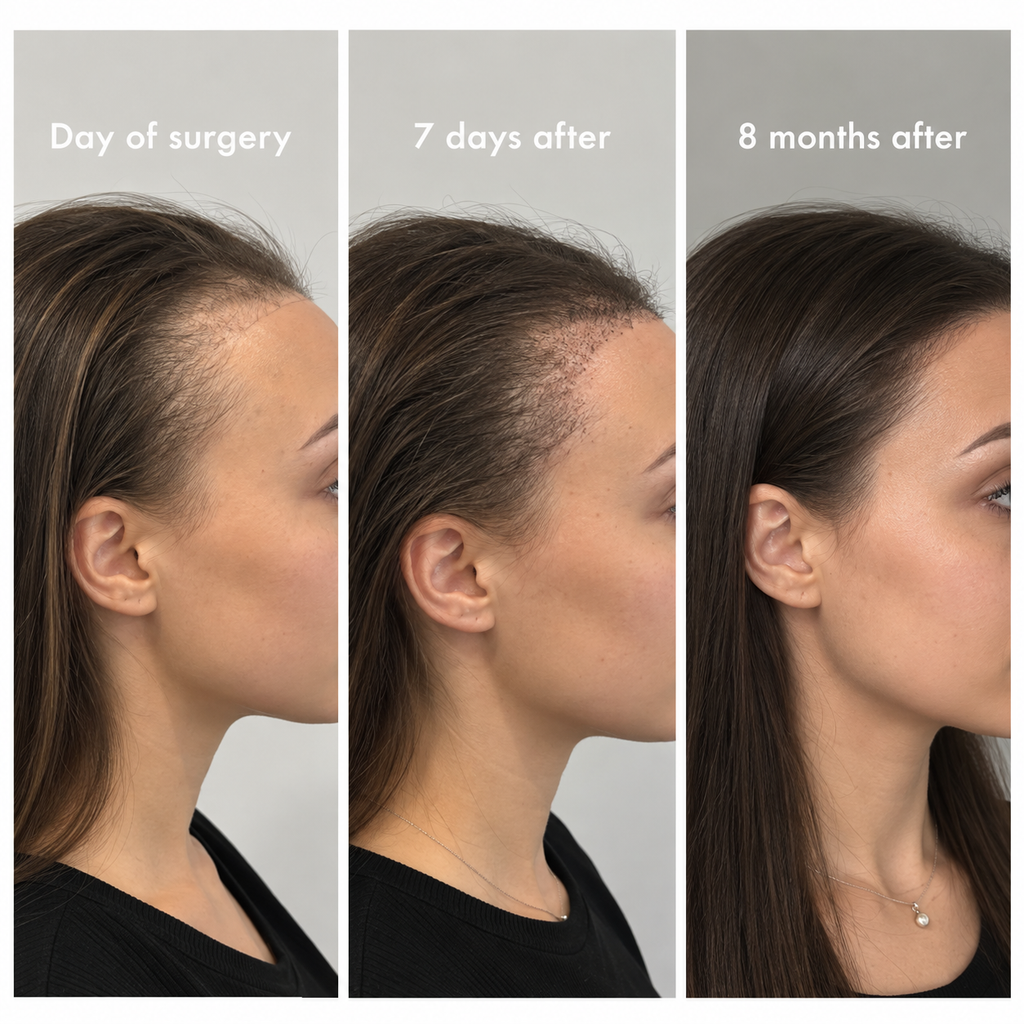
Female Pattern Hair Loss With a Preserved Donor Area
Female pattern hair loss often causes reduced density across the top or central part of the scalp. A transplant may be considered when the condition has been assessed and the donor area remains sufficiently stable.
The medical team must determine where the transplanted follicles can create the most visible improvement. Attempting to cover a very large area with limited donor hair may create weak density everywhere.
In some cases, transplantation is combined with a long-term plan for protecting the patient’s existing hair. Any medical treatment must be prescribed individually by the appropriate professional.
Stable Traction Alopecia
Traction alopecia can develop when tight hairstyles repeatedly pull on the same follicles. It may affect the temples, sides, or frontal border.
A transplant may be possible when the pulling has stopped and the affected area is stable. The scalp should also be healthy enough to receive new follicles.
If damaging hairstyles continue, both the remaining and transplanted hair may be placed under unnecessary stress. Changing the source of traction is therefore part of the treatment plan.
Hair Loss in a Healed Scar
Some women have a hairless area following an injury, burn, or previous operation. Transplantation may sometimes help soften the visibility of the scar.
Scar tissue has a different blood supply and structure from normal scalp tissue. The medical team must examine its thickness, maturity, and location before deciding how many grafts can be placed safely.
The possible density may be different from transplantation into healthy skin. More than one treatment stage may occasionally be considered.
When A Hair Transplant May Not Be The Right Step Yet
Not being suitable today does not always mean that transplantation will never be possible. It may mean that the cause of hair loss needs to be diagnosed, treated, or monitored first.
A transplant may be delayed when there is:
- Sudden or unexplained shedding
- Recent postpartum hair loss
- An untreated nutritional deficiency
- Uncontrolled thyroid or hormonal problems
- Active inflammation, infection, or irritation
- An unstable autoimmune hair-loss condition
- Continued damage from tight hairstyles
- Extensive thinning inside the donor area
- Ongoing rapid hair loss
- A medical condition that affects healing
- Expectations that exceed the available donor supply
The team should explain why treatment is being delayed and what should happen next. Responsible planning sometimes means recommending further evaluation instead of booking a procedure immediately.
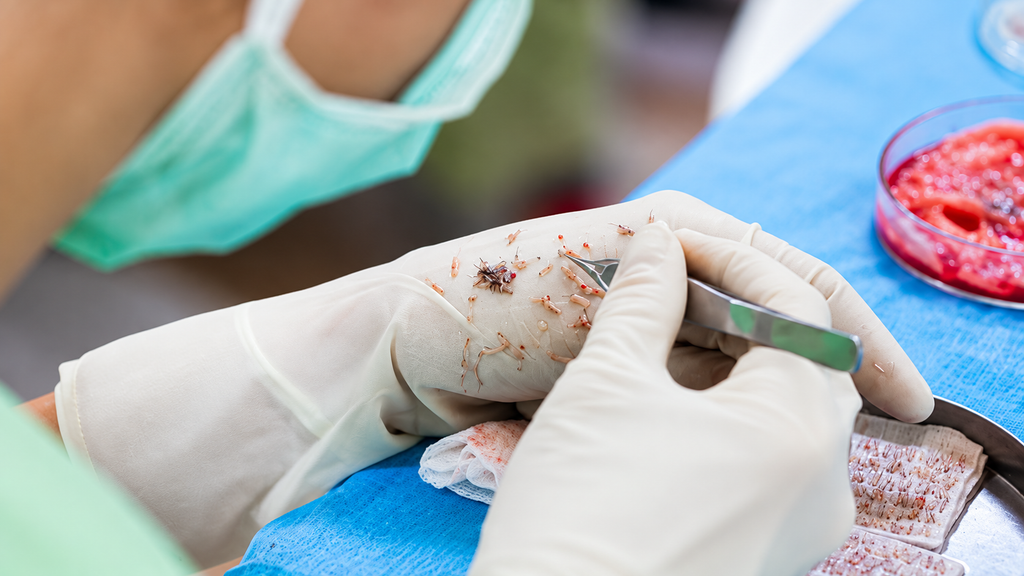
The Donor Area Is The Most Important Limitation
The donor area is normally located at the back and sides of the scalp. These follicles are selected because they may be more resistant to the process affecting the thinning area.
The specialist assesses:
| Donor Factor | Perché è importante |
| Hair density | Determines how many follicles may be available |
| Follicle quality | Influences the strength of transplanted growth |
| Hair thickness | Thicker strands may provide greater visual coverage |
| Miniaturization | May show whether the donor area is also thinning |
| Scalp condition | Healthy skin supports safer extraction and healing |
| Hair texture | Influences how much coverage a graft can create |
| Previous extraction | Reduces the remaining donor supply |
| Contrast with skin | Can affect how dense or thin the hair appears |
Removing too many grafts can leave visible thinning in the donor area. The safest plan protects the back of the scalp while selecting enough follicles to improve the target area.
Donor hair is limited. It should be managed as a long-term resource rather than used only to achieve the greatest possible graft number in one session.
Existing Hair Must Also Be Protected
Many female patients are not completely bald in the treatment area. They still have natural hair growing between the areas of reduced density.
Placing grafts between these hairs requires controlled planning. The medical team must consider follicle direction, spacing, and the risk of temporarily disturbing weak existing hairs.
The transplant should complement the natural hair rather than compete with it. This is one reason a high graft number does not automatically produce a better result.
A balanced plan should also consider how the untreated hair may change in the future. The transplanted area must continue to look natural if further thinning develops around it.
Choosing Between FUE And DHI
Medical Tourism in Albania offers modern hair-restoration options that can be selected according to the scalp, donor area, treatment zone, and required density.
With an FUE hair transplant in Albania, individual follicular units are extracted from the donor area. The follicles are then prepared and placed into the planned recipient sites.
Inoltre, trapianto di capelli DHI Plus Gold also uses individually extracted follicles. An implanter instrument is used during the placement stage to help control the depth, direction, and angle.
Neither technique is automatically right for every woman. The decision should depend on:
- The number of grafts required
- The size and position of the treatment area
- Existing hair inside the recipient area
- Donor density
- Spessore e texture dei capelli
- The planned direction of growth
- Whether limited shaving may be possible
- The experience of the medical team
The recommended technique should be explained clearly before the patient travels to Albania.
How The Consultation Is Organized
International patients can begin with an online evaluation. This makes it possible to receive an initial opinion before booking flights or accommodation.
The patient may be asked to send clear photographs showing:
- The frontal hairline
- Both temples
- The top of the scalp
- The central parting
- The crown
- The back of the head
- Both sides of the donor area
- The scalp under bright, even lighting
Information about when the hair loss started is also important. Patients should mention pregnancy, menopause, medical conditions, medication, previous hair treatments, family history, and any earlier transplant.
The online evaluation provides an initial direction. Final suitability, graft planning, and technique selection should be confirmed after an in-person examination in Tirana.
What Happens During A Female Hair Transplant?
Treatment begins with a final scalp assessment and hairline or density plan. The medical team marks the areas where new follicles will be placed and confirms the donor zone.
Local anaesthetic is commonly used to keep the scalp comfortable. Individual follicular units are then extracted carefully from the donor area.
The grafts are examined and organized before implantation. They are placed according to the natural angle and direction of the surrounding hair.
Single-hair grafts may be selected for softer borders, while grafts containing more hairs can help create coverage behind the visible edge. The distribution depends on the treatment goal and the available donor supply.
The length of the procedure varies according to the number of grafts and the technique. Patients receive personalized aftercare instructions before leaving the clinic.
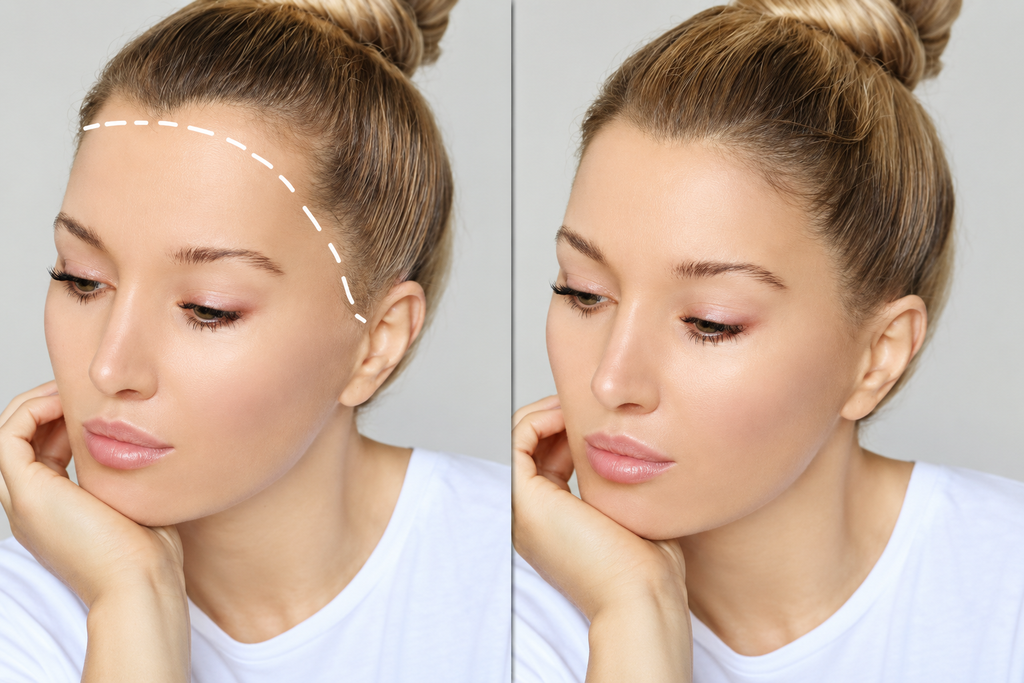
Recovery And Returning To Normal Activities
Small crusts can form around the implanted follicles during the early recovery period. Mild redness, tenderness, or swelling may also occur.
Patients must follow the clinic’s instructions about washing, sleeping, medication, sun exposure, exercise, and touching the treated area. The grafts should not be scratched or picked.
Many patients can return to light daily activities relatively quickly. However, the visible recovery period depends on skin sensitivity, graft number, treatment area, and whether parts of the scalp were shaved.
International patients should remain in Albania for the follow-up checks recommended by the medical team. Travel plans should be based on medical guidance rather than the cheapest available flight.
The guide to medical tourism aftercare in Albania explains how recovery support continues after patients return home.
When Will The New Hair Grow?
The newly implanted hairs may shed during the first weeks. This does not necessarily mean the follicles have been lost.
New growth usually develops gradually rather than appearing all at once. Early changes may become noticeable after several months, followed by continued improvement in thickness and coverage.
Many patients evaluate more developed results around 12 months. Some areas and hair types may continue changing beyond this point.
Transplanted follicles cannot prevent untreated hair from thinning. Long-term results therefore depend on the transplant plan, donor quality, the original diagnosis, and the future condition of the patient’s natural hair.
Questions To Ask Before Booking
A clear consultation should answer the following questions:
- What is the likely cause of my hair loss?
- Is my hair loss stable enough for transplantation?
- Is the donor area also becoming thinner?
- How many grafts can be extracted safely?
- Which areas should be treated first?
- What density is realistic for my case?
- Is FUE or DHI more appropriate?
- Will any part of my hair need to be shaved?
- Could my existing hair continue thinning?
- What will the donor area look like after extraction?
- Quanto tempo dovrei rimanere in Albania?
- What follow-up support is available after I return home?
The patient should understand both the opportunities and the limitations before making a decision.
Domande Frequenti
Can Every Woman With Thinning Hair Have A Transplant?
No. Suitability depends on the cause of hair loss, its stability, scalp health, and the quality of the donor area. Some women need medical assessment or treatment before surgery can be considered.
Can A Transplant Treat Hair Loss After Pregnancy?
Postpartum shedding may improve naturally over time. A transplant should not be planned while the hair loss is recent or still changing. The condition should first be evaluated and monitored.
Is A Female Hair Transplant Permanent?
Transplanted follicles can provide long-lasting growth when they are taken from a stable donor area. However, the patient’s existing untreated hair can continue to thin.
Will I Need To Shave My Entire Head?
Not always. The shaving plan depends on the technique, donor area, number of grafts, and clinic protocol. This should be discussed during the consultation rather than assumed.
Can A Hair Transplant Make Thin Hair Completely Dense?
A transplant can improve visible coverage, but it cannot recreate unlimited natural density. The result is restricted by the number and quality of available donor follicles.
Is FUE Or DHI Better For Women?
Neither is automatically better. The most suitable technique depends on the recipient area, existing hair, required graft number, and individual treatment plan.
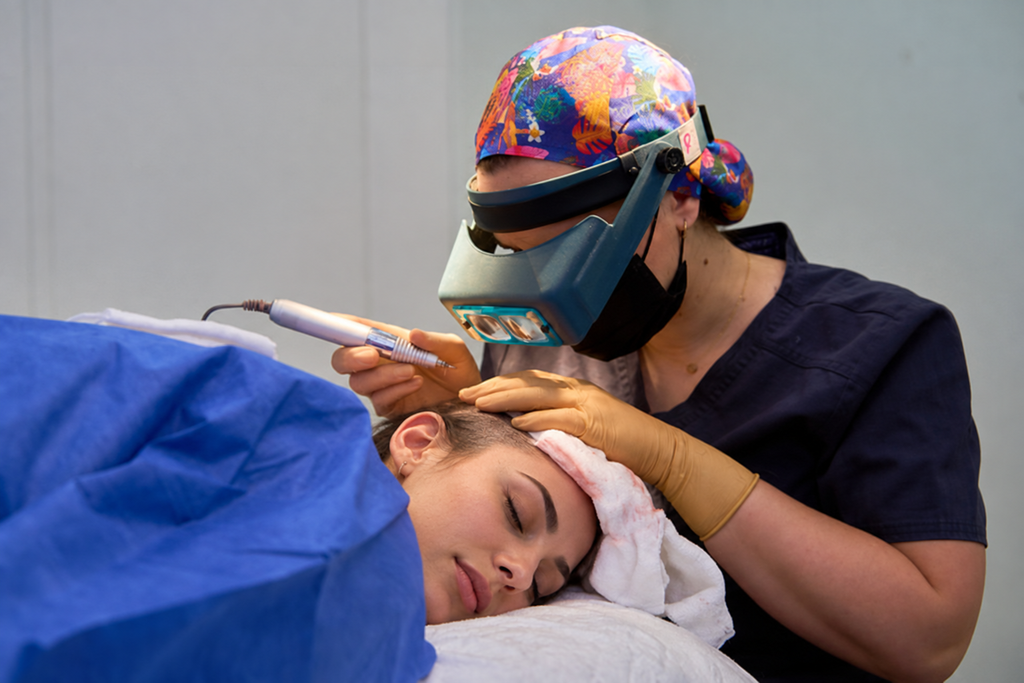
Discover Whether a Female Hair Transplant Is Right for You ✨
You do not need to travel before understanding your options. Medical Tourism in Albania can review your case, explain whether transplantation is suitable, and organize your complete treatment journey in Tirana.
📸 Send clear photographs for an initial evaluation
👩⚕️ Receive a personalized assessment of your hair loss and donor area
📝 Understand the recommended technique and realistic graft plan
✈️ Get support with appointments, accommodation, and airport transfers
📲 Rimani connesso durante il recupero e dopo il ritorno a casa
Start your consultation today:
WhatsApp: +355 69 657 9999 or +355 69 625 1111
Telefono: +355 45 627 297
E-mail: info@medicaltourisminalbania.com
👉 Contatta Medical Tourism in Albania and find out whether a female hair transplant can provide the improvement you are looking for.

 Italian
  English
  Albanian
  Spanish
  German
  Greek
Greek  French
  Dutch
Dutch  Polish