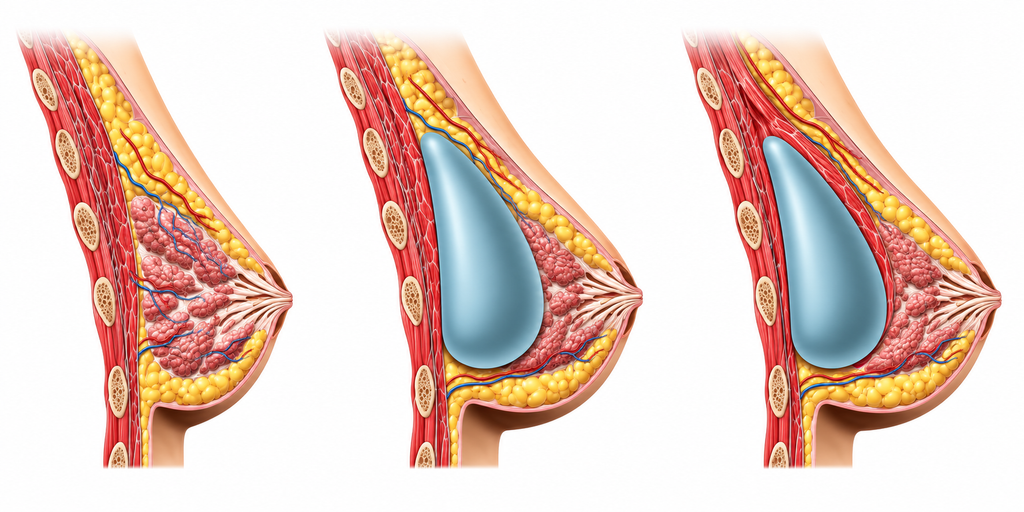
Borstimplantaten kunnen boven de borstspier, gedeeltelijk eronder, of met een dual-plane techniek worden geplaatst. Geen enkele plaatsing is automatisch het beste voor elke patiënt.
De chirurg kiest de implantaatpositie na het onderzoeken van borstweefsel, huidkwaliteit, borstkas anatomie, levensstijl en het gewenste resultaat.
Waar Kan Een Borstimplantaat Worden Geplaatst?
De borst ligt boven de musculus pectoralis major van de borstkas. Tijdens een borstvergroting creëert de chirurg een pocket in een specifieke weefsellaag en plaatst het implantaat erin.
De drie vaak besproken posities zijn:
- Boven de spier, ook wel subglandulaire plaatsing genoemd
- Onder de spier, meestal verwijzend naar gedeeltelijke subpectorale plaatsing
- Dual-plane plaatsing, die kenmerken van beide posities combineert
Patiënten die overwegen borstvergroting in Albanië moeten begrijpen dat plaatsing en implantaatgrootte samen moeten worden gepland. Het kiezen van de een zonder rekening te houden met de ander kan invloed hebben op bedekking, beweging en langdurige ondersteuning.
Wat Betekent Plaatsing Boven De Spier?
Bij plaatsing boven de spier wordt het implantaat achter het natuurlijke borstweefsel maar voor de musculus pectoralis major geplaatst.
Het borstweefsel en de huid bedekken het implantaat. De borstspier blijft erachter en wordt niet opgetild om de belangrijkste implantaatpocket te vormen.
Deze plaatsing kan worden overwogen wanneer de patiënt genoeg natuurlijk weefsel heeft om het implantaat te verbergen. Het kan ook nuttig zijn wanneer het vermijden van implantaatbeweging tijdens sterke borstspiercontractie een belangrijk doel is.
Echter, het implantaat kan meer zichtbaar worden wanneer de patiënt dun weefsel, beperkt borstvolume of zwakke huidondersteuning heeft.
Wat Betekent Plaatsing Onder De Spier?
De uitdrukking "onder de spier" kan enigszins misleidend zijn. Bij veel cosmetische borstoperaties wordt het implantaat niet volledig door spier bedekt.
Het bovenste deel van het implantaat wordt achter de pectoralis major spier geplaatst, terwijl het onderste deel meestal onder de onderste rand ervan uitsteekt. Dit wordt vaak beschreven als gedeeltelijke subpectorale plaatsing.
De spier biedt extra bedekking over het bovenste deel van het implantaat. Dit kan zorgen voor een soepelere overgang tussen de borstkas en de borst, vooral bij patiënten met beperkt natuurlijk weefsel.
Het nadeel is dat het implantaat kan bewegen wanneer de borstspier samentrekt. Herstel kan ook meer spiergerelateerde spanning of ongemak met zich meebrengen.
Wat Is Dual-Plane Borstimplantaatplaatsing?
Dual-plane plaatsing combineert spierbedekking in het bovenste deel van de borst met minder spierbedekking over het onderste implantaat.
De chirurg maakt een deel van de verbinding tussen de spier en het borstweefsel los. Dit stelt het implantaat in staat om de onderste borst te vormen terwijl het extra bedekking aan de bovenkant behoudt.
Er zijn verschillende vormen van dual-plane chirurgie. De mate van weefselafscheiding en spierloslating hangt af van de borstvorm van de patiënt, de tepelpositie, de huid en het geplande implantaat.
Dual-plane plaatsing kan nuttig zijn bij geselecteerde patiënten, maar het is geen universele oplossing. De chirurg moet beslissen of de extra weefselaanpassing geschikt is.
Onder versus boven de spier: belangrijkste verschillen
| Factor | Boven de spier | Onder de spier |
| Implantaatpositie | Achter borstweefsel en voor de borstspier | Ten minste gedeeltelijk achter de borstspier |
| Bovenste implantaatbedekking | Afhankelijk voornamelijk van natuurlijk borstweefsel | Extra bedekking door de spier |
| Spierbeweging | Het implantaat wordt minder beïnvloed door samentrekking van de borstspier | Het implantaat kan bewegen of van vorm veranderen tijdens samentrekking |
| Vroegtijdig ongemak | Kan minder spiergerelateerd ongemak met zich meebrengen | Spierstrakheid kan meer merkbaar zijn |
| Zichtbare implantaatranden | Meer mogelijk wanneer het weefsel dun is | Spier kan helpen de bovenrand van het implantaat te verbergen |
| Rimpeling | Kan meer zichtbaar zijn bij beperkte weefselbedekking | Bovenste rimpeling kan minder zichtbaar zijn door spierbedekking |
| Vormgeving van de onderste borst | Implantaat kan direct de borstholte vullen | Afhankelijk van spieronthechting en chirurgische techniek |
| Atletische overwegingen | Voorkomt beweging veroorzaakt door het implantaat achter de spier | Sterke borstactiviteit kan zichtbare implantaatbeweging veroorzaken |
| Geschikte patiënten | Vaak patiënten met voldoende weefsel- en huidondersteuning | Vaak patiënten die meer dekking van de bovenste implantaat nodig hebben |
Weefseldikte Is Een Van De Belangrijkste Factoren
De chirurg moet bepalen of de patiënt voldoende weefsel heeft om het implantaat te bedekken.
Een slanke patiënt met zeer weinig borstweefsel kan een grotere kans hebben op zichtbare implantaatranden of rimpelingen bij plaatsing boven de spier. Extra spierbedekking kan het bovenste deel van de borst er gladder uit laten zien.
Patiënten met meer natuurlijk borstweefsel kunnen voldoende dekking hebben voor een implantaat boven de spier. Zelfs dan moet de weefseldikte in verschillende gebieden worden geëvalueerd, omdat de dekking niet overal in de borst gelijk kan zijn.
De chirurg kan de dikte van het weefsel onderzoeken door het voorzichtig te knijpen, metingen te verrichten en de borst vanuit verschillende hoeken te beoordelen.
Huidkwaliteit En Ondersteuning Zijn Ook Belangrijk
De huid moet het gewicht van de borst en het implantaat ondersteunen. Dunne, uitgerekte of minder elastische huid kan een groot implantaat mogelijk niet goed vasthouden, ongeacht waar het wordt geplaatst.
Zwak weefsel kan de mogelijkheid vergroten van:
- Toekomstige borstuitrekking
- Een lagere implantaatpositie
- Zichtbare implantaatranden
- Rimpeling
- Veranderingen in de borstplooi
- Vroegtijdige terugkeer van verslapping
- Verschillen tussen de twee zijden
Het plaatsen van een implantaat onder de spier beschermt de zwakke huid niet permanent. De onderste borst heeft nog steeds voldoende ondersteuning nodig, vooral wanneer een groter implantaat wordt gekozen.
Een matig implantaat dat past bij het weefsel van de patiënt kan een stabieler resultaat bieden dan het gebruik van extra volume om losse huid op te vullen.
Implantaatgrootte, -breedte en -profiel beïnvloeden de plaatsing
Implantaten moeten niet alleen op basis van cupmaat worden geselecteerd. Bh-maten verschillen per fabrikant en bieden geen nauwkeurige chirurgische meting.
De chirurg overweegt:
- Borstbreedte
- Breedte van de borstbasis
- Bestaand borstvolume
- Weefseldikte
- Huidelasticiteit
- Positie van de borstplooi
- Tepelpositie
- Afstand tussen de borsten
- Implantaatprojectie
- Natuurlijke asymmetrie
- Langdurige weefselondersteuning
Een breed implantaat kan verder reiken dan de natuurlijke borstafmetingen van de patiënt. Een implantaat met overmatige projectie kan onnodige druk op de huid uitoefenen.
Plaatsing kan een implantaat dat niet bij de borstkas past niet corrigeren. De afmetingen van het implantaat en de positie van de pocket moeten hetzelfde chirurgische plan ondersteunen.
Het Gewenste Uiterlijk Is Deel Van De Beslissing
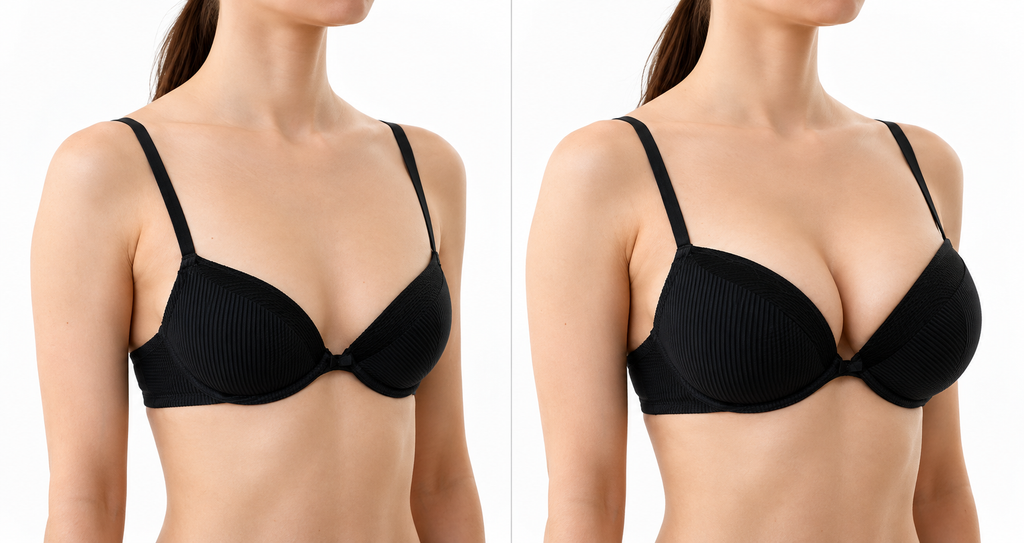
Sommige patiënten willen een zachtere overgang van de borstkas naar de borst. Anderen geven de voorkeur aan meer zichtbare bovenste volheid.
Plaatsing onder de spier of in een dual-plane kan zorgen voor een geleidelijke bovenste helling bij patiënten met dun weefsel. Plaatsing boven de spier kan soms directere volheid creëren omdat de borstspier niet over het implantaat drukt.
Echter, de plaatsing alleen bepaalt niet of het resultaat er natuurlijk uitziet. Het uiteindelijke uiterlijk hangt ook af van:
- Implantaatvolume
- Implantaatprofiel en -breedte
- Natuurlijk borstweefsel
- Huidsterkte
- Borstkasvorm
- Borstplooi
- Tepelpositie
- Verschillen tussen de twee zijden
- De kwaliteit van de implantaatzak
Een natuurlijk ogend resultaat komt voort uit het afstemmen van al deze factoren in plaats van het volgen van een enkele plaatsingsregel.
Eerdere Borstoperaties Kunnen Het Plan Veranderen
Patiënten die bestaande implantaten vervangen, vereisen een andere beoordeling dan patiënten die voor het eerst een vergroting ondergaan.
De chirurg moet mogelijk het volgende evalueren:
- De huidige implantaatpositie
- Bestaand littekenweefsel
- Capsulaire contractuur
- Weefseldikte
- Verplaatsing van het implantaat
- Borstasymmetrie
- Veranderingen in de borstplooi
- Huiduitrekking
- Implant scheuren of leeglopen
- Eerdere incisie en pocket
Tijdens vervanging van borstimplantaten in Albanië, de bestaande pocket kan worden aangepast of veranderd naar een andere weefsellaag. Deze beslissing hangt af van de reden voor revisie en de conditie van het resterende weefsel.
Verandering van onder naar boven de spier, of van boven naar onder, is mogelijk in geselecteerde gevallen. Het is niet automatisch eenvoudig en kan behandeling van littekenweefsel, pocketreparatie, een lift of extra interne ondersteuning vereisen.
Borstvoeding en Tepelgevoeligheid
Implantaatplaatsing is slechts één factor die borstvoeding en borstgevoeligheid kan beïnvloeden.
Andere belangrijke factoren zijn onder andere:
- Incisielocatie
- Hoeveelheid weefselontleding
- Eerdere borstoperatie
- Natuurlijk klierweefsel
- Veranderingen aan zenuwen of melkkanalen
- Geneesrespons
- Toekomstige zwangerschap-gerelateerde veranderingen
Geen enkele chirurg kan garanderen dat borstvoeding of tepelgevoeligheid ongewijzigd blijft. Patiënten die van plan zijn zwanger te worden, moeten dit voor de operatie bespreken.
Zwangerschap kan ook het borstvolume, de huid en de positie veranderen, zelfs wanneer de implantaten intact blijven.
Mammografieën en Implantaatbewaking
Borstimplantaten verwijderen niet de noodzaak voor normale borstkankerscreening. Patiënten moeten het radiologieteam informeren dat ze implantaten hebben wanneer ze een mammografie of een ander borstonderzoek regelen.
Speciale opnamen kunnen nodig zijn om meer van het natuurlijke borstweefsel te laten zien. Screeningsaanbevelingen moeten gebaseerd zijn op leeftijd, medische geschiedenis, implantatentype, symptomen en lokale klinische richtlijnen.
Patiënten moeten ook de fabrikant en het model van hun implantaten kennen. Elke nieuwe zwelling, pijn, verandering in vorm, knobbel of ongebruikelijke stevigheid moet medisch worden beoordeeld.
Risico's van Borstimplantaatchirurgie
Elke borstimplantaatoperatie brengt risico's met zich mee, ongeacht de plaatsing.
Mogelijke complicaties zijn onder andere:
- Bloedend
- Infectie
- Vertraagde wondgenezing
- Vochtophoping
- Veranderingen in tepel- of borstgevoel
- Zichtbare of verbrede littekens
- Verplaatsing van het implantaat
- Borstasymmetrie
- Rimpeling
- Capsulaire contractuur
- Implant scheuren of leeglopen
- Veranderingen in de borstplooi
- Animatiedeformatie
- Aanhoudend ongemak
- Complicaties gerelateerd aan anesthesie
- Noodzaak voor aanvullende chirurgie
Borstimplantaten zijn geen levenslange apparaten. Toekomstige chirurgie kan nodig zijn vanwege complicaties, weefselveranderingen, implantaatbeschadiging, zwangerschap, veroudering, gewichtsverandering of persoonlijke voorkeur.
Herstel na implantaten onder of boven de spier
Herstelinstructies zijn afhankelijk van de pocket, het implantaat, de incisie en of er een andere procedure is uitgevoerd.
Patiënten kunnen advies ontvangen over:
- Gebruik van chirurgische beha
- Slaaphouding
- Douchen en wondverzorging
- Medicatie
- Armbeweging
- Rijden
- Terugkeren naar werk
- Objecten tillen
- Borstspieroefeningen
- Vliegen
- Vervolgafspraken
Borstspieroefeningen moeten mogelijk langer worden beperkt na plaatsing onder de spier. Patiënten dienen de tijdlijn van hun chirurgisch team te volgen in plaats van een algemeen online schema te gebruiken.
Internationale patiënten moeten lang genoeg in Albanië blijven voor de vereiste medische controles. Onze gids over nazorg bij medisch toerisme legt uit waarom follow-up en terugreis vóór de behandeling moeten worden geregeld.
Veelgestelde vragen
Is het beter om borstimplantaten onder of boven de spier te hebben?
Geen van beide plaatsingen is beter voor elke patiënt. De beslissing hangt af van weefselbedekking, huidondersteuning, implantaatafmetingen, activiteit van de borstspier, bestaande borstvorm en esthetische doelen.
Is Onder-de-Spier Plaatsing Beter Voor Dunne Patiënten?
Het kan extra bedekking van het bovenste deel van het implantaat bieden wanneer natuurlijk weefsel beperkt is. Het volledige plan moet echter ook rekening houden met de implantaatgrootte, huidsterkte, levensstijl en de mogelijkheid van spieranimatie.
Kunnen Over-de-Spier Implantaten Er Natuurlijk Uitzien?
Ja, wanneer de patiënt voldoende natuurlijk weefsel heeft en het implantaat past bij de borst en de borstkas. Dunne bedekking of een te groot implantaat kan randen en rimpelingen zichtbaarder maken.
Bewegen Onder-de-Spier Implantaten Altijd Tijdens Oefeningen?
Niet altijd. De mate van beweging varieert afhankelijk van spierkracht, pocketontwerp, chirurgische techniek en implantaatpositie.
Kan Implantaatplaatsing Hangende Borsten Corrigeren?
Plaatsing alleen kan aanzienlijke verslapping of een lage tepelpositie niet corrigeren. Een borstlift kan nodig zijn om overtollige huid te verwijderen en de borst te hervormen.
Kan De Implantaatpocket Later Worden Veranderd?
Het kan mogelijk zijn tijdens revisiechirurgie. De chirurg moet littekenweefsel, huidkwaliteit, bestaande implantaatpositie beoordelen en of pocketreparatie of een borstlift nodig is.
Vind de Juiste Implantaatplaatsing voor Uw Lichaam ✨
De plaatsing van borstimplantaten moet worden gekozen op basis van uw anatomie, niet gekopieerd van een andere patiënt. Bij Medical Tourism in Albanië helpen we internationale patiënten hun opties te begrijpen en organiseren we elke fase van de behandeling in Tirana.
📸 Stuur uw foto's voor een gratis eerste evaluatie
👨⚕️ Ontvang een persoonlijk advies van een ervaren chirurg
📐 Ontdek implantaatmaten, profielen en plaatsingsopties
✈️ Krijg ondersteuning bij afspraken, accommodatie en luchthavenvervoer
📲 Blijf verbonden tijdens het herstel en na terugkeer naar huis
Klaar om uw borstvergrotingsplan te bespreken?
👉 Neem contact op met Medical Tourism in Albania vandaag.
WhatsApp: +355 69 657 9999 of +355 69 625 1111
Telefoon: +355 45 627 297
E-mail: info@medicaltourisminalbania.com
 Dutch
Dutch  English
  Italian
  Albanian
  Spanish
  German
  Greek
Greek  French
  Polish