
A brow lift treats hooded eyes caused mainly by low or sagging eyebrows. Upper blepharoplasty treats excess skin and selected fat directly on the upper eyelids.
Some patients have both problems. In these cases, combining the procedures may create a more balanced result than treating only one area.
Hooded Eyes Do Not Always Have The Same Cause
“Hooded eyes” describes skin that folds over the natural upper-eyelid crease. The fold may make the eyelid look smaller, hide eye makeup, or create a tired expression.
However, the visible hood can come from different areas. It may be caused by loose upper-eyelid skin, a low eyebrow position, natural facial anatomy, or a combination of these factors.
This distinction is important because brow lift and upper blepharoplasty do not treat the same tissue. Choosing the wrong procedure may improve one part of the eye area while leaving the main cause unchanged.
The Main Difference Between The Procedures
The easiest way to understand brow lift vs upper blepharoplasty is to look at where each operation works.
| Concern | Upper Blepharoplasty | Brow Lift |
| Excess upper-eyelid skin | Directly removes selected skin | Does not directly remove eyelid skin |
| Low eyebrow position | Provides limited or no correction | Repositions the eyebrow |
| Heavy outer brow | Usually does not correct the cause | Can lift the outer brow |
| Hidden eyelid crease | May reveal more of the eyelid | May help when low brows cause the hood |
| Forehead lines | Does not treat them | May soften selected forehead lines |
| Frown lines between the brows | Not the main treatment area | May improve them with selected techniques |
| Upper-eyelid fat | Can remove or reposition selected fat | Does not directly treat eyelid fat |
| Visual obstruction from eyelid skin | May help in medically suitable cases | May help when the brow contributes to the obstruction |
What Does Upper Blepharoplasty Treat?
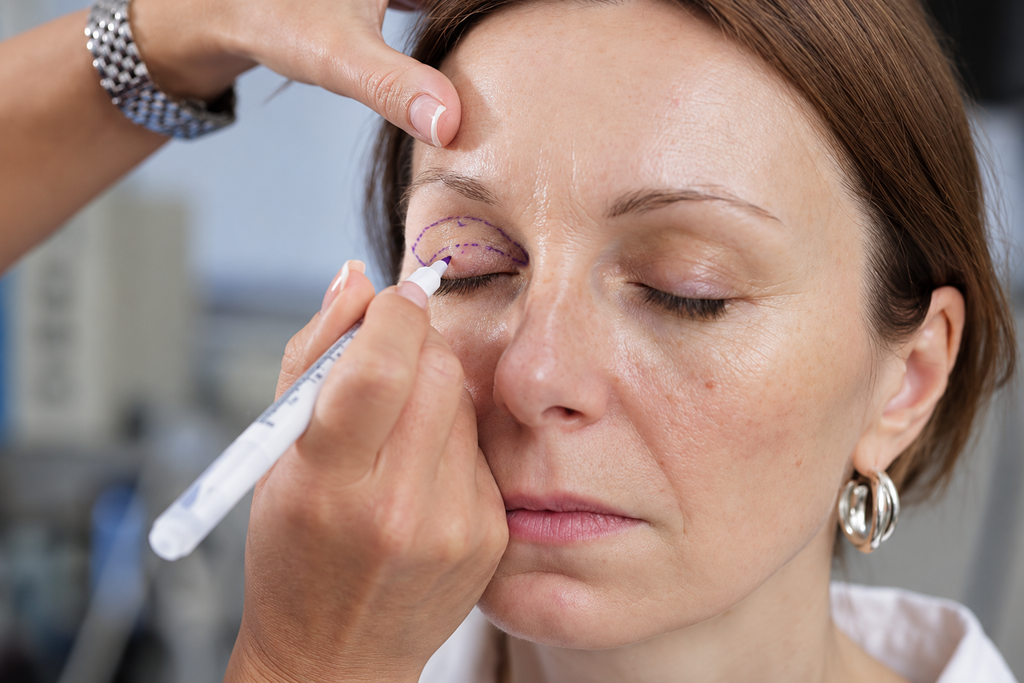
Upper blepharoplasty focuses on the eyelids themselves. During the procedure, the surgeon removes a carefully measured amount of excess skin and may adjust selected fat when needed.
It can be suitable when the eyebrows remain in a good position but loose skin has collected over the eyelid crease. Patients may notice that their eyelid space has become smaller or that makeup transfers onto the fold above the eye.
Medical Tourism in Albania offers eyelid surgery in Albania for international patients who want to improve selected changes around the upper or lower eyelids.
Upper blepharoplasty may help when:
- The upper-eyelid skin folds over the natural crease
- The eyelid feels heavy
- The eyebrows are not significantly low
- Excess skin makes the eyes look tired
- The two upper eyelids have different amounts of skin
- The skin reaches close to the eyelashes
- The upper field of vision is affected in selected cases
The surgeon must be conservative when removing tissue. Taking too much skin can affect eyelid closure, eye comfort, and the natural relationship between the eyelid and brow.
What Does A Brow Lift Treat?
A brow lift works above the eyes. It repositions low eyebrows and adjusts selected forehead tissues.
As the brow moves lower, it can push skin toward the upper eyelid. This creates heaviness that may look like an eyelid-only problem even when the main cause begins higher on the face.
A brow lift in Albania may be considered when:
- The eyebrows sit lower than before
- The outer part of the brow has dropped
- The brow presses skin toward the eyelid
- The patient regularly raises the forehead to open the eyes
- Forehead muscles feel active or tired
- One eyebrow sits lower than the other
- Forehead or frown lines are part of the concern
- Upper blepharoplasty alone would not correct the brow position
The goal is not to place the eyebrows as high as possible. A natural result should respect the patient’s facial structure, gender, expression, hairline, and original brow shape.
How Can You Tell Where The Heaviness Comes From?
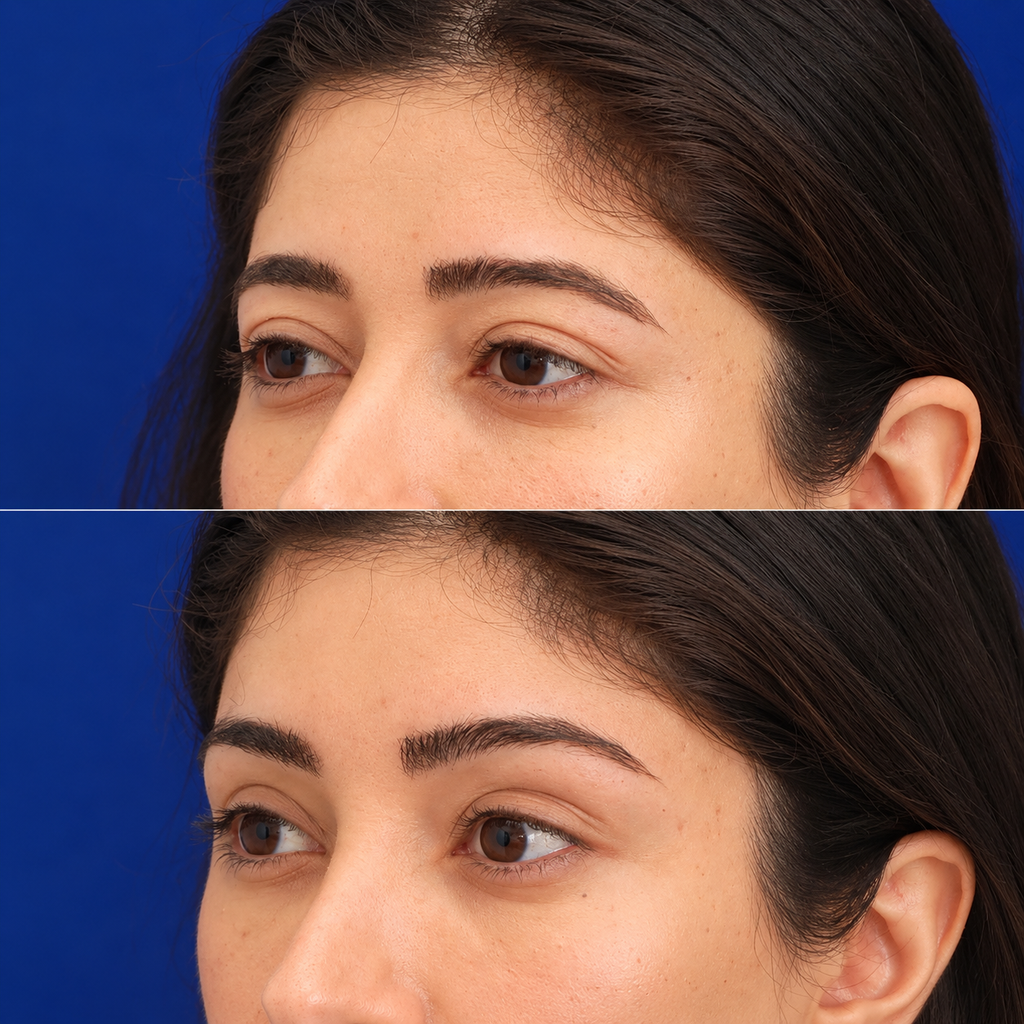
Patients often look only at the upper-eyelid fold. The surgeon examines the full upper third of the face.
This includes:
- Eyebrow height
- Eyebrow shape
- Position of the outer brow
- Forehead length
- Hairline position
- Amount of upper-eyelid skin
- Eyelid crease
- Upper-eyelid fat
- Eye shape
- Differences between the two sides
- Previous surgery or injectable treatments
- Ability to close the eyes comfortably
Some patients constantly raise their eyebrows without realizing it. This can create horizontal forehead lines and temporarily hold the brows in a higher position.
During the examination, the surgeon allows the forehead to relax. This helps reveal the true eyebrow position and shows whether the hooding begins at the brow, eyelid, or both.
Gently lifting the brow in front of a mirror may help a patient understand the relationship, but it is not a medical test. Pulling too strongly can create a false idea of the possible surgical result.
When Upper Blepharoplasty May Be The Better Choice
Upper blepharoplasty may be more appropriate when the brow already sits in a suitable position. The main problem should be excess tissue located directly on the eyelid.
A typical candidate may have a clear fold of loose skin while the eyebrow remains stable. The surgeon may also notice localized fullness caused by upper-eyelid fat.
The operation should create a cleaner eyelid contour without changing the patient’s identity. It should not produce an excessively deep crease or an empty appearance around the eyes.
Patients can also explore our guide on how to treat hooded eyelids for more information about the causes and available options.
When A Brow Lift May Be The Better Choice
A brow lift may be more suitable when low eyebrows are creating much of the heaviness. This is especially common when the outer brow has descended and presses tissue over the outer eyelid.
Treating only the eyelid in this situation may remove some skin but leave the low brow untreated. It can also reduce the available eyelid skin without correcting the position of the tissue above it.
Different brow-lift techniques can affect different areas. Depending on the patient, the surgeon may consider an endoscopic, temporal, hairline, or another surgical approach.
The choice depends on brow position, hairline, forehead length, degree of correction, previous surgery, and scar planning.
When Both Procedures May Be Needed
Some patients have low eyebrows and genuine excess upper-eyelid skin. Moving the brow alone may leave part of the eyelid fold behind, while blepharoplasty alone may not improve the pressure coming from above.
Combining the procedures can treat both levels during one surgical plan:
- The brow lift repositions the eyebrow
- Upper blepharoplasty removes selected eyelid skin
- The surgeon balances the brow with the eyelid crease
- Both sides are planned together
- The result can look more connected across the upper face
More surgery is not automatically better. The surgeon should only combine treatments when both provide a clear benefit.
The amount of tissue removed during blepharoplasty may also need to be adjusted when a brow lift is planned. Lifting the brow changes how much skin remains over the eyelid.
Can Hooded Eyes Be Natural?
Yes. Hooded eyes are not always caused by ageing.
Some people naturally have less visible eyelid space because of genetics, brow shape, bone structure, or the distribution of soft tissue. Their eyes may have looked hooded since childhood or early adulthood.
Surgery should not be recommended simply because this eye shape exists. Treatment may be considered when the patient personally wants a change and understands how surgery could affect their natural features.
The surgeon should distinguish between improving heaviness and removing the characteristics that make the patient’s eyes recognizable.
Can Surgery Improve Vision?
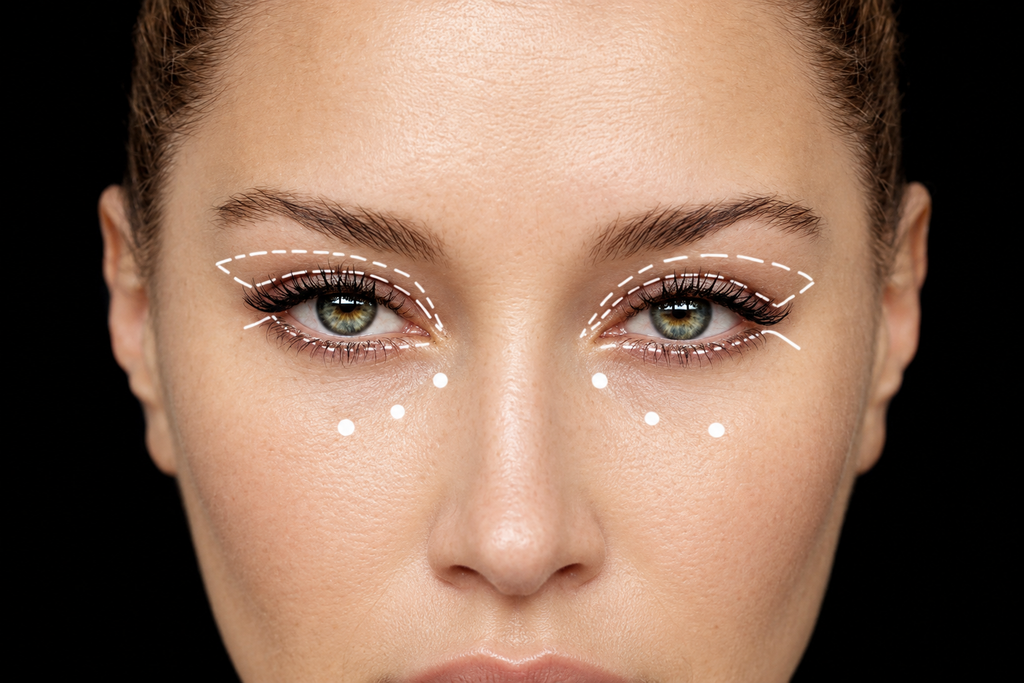
In some patients, upper-eyelid skin or a low brow can interfere with the upper or outer field of vision. This is different from choosing surgery only for appearance.
The surgeon may ask about:
- Difficulty seeing upward
- Skin resting near the eyelashes
- Eye fatigue later in the day
- Constant forehead lifting
- Difficulty reading
- Problems while driving
- Headaches linked to forehead muscle use
An eye examination or visual-field assessment may be requested when functional problems are suspected. Surgery cannot correct vision problems caused by the eye itself.
How Upper Blepharoplasty Is Performed
The surgeon marks the natural upper-eyelid crease and identifies the amount of tissue that can be adjusted safely. The plan is checked while the patient is sitting and looking forward.
An incision is usually positioned inside the natural crease. Selected skin is removed, and fat may be adjusted when clinically appropriate.
The incision is then closed carefully. The final scar normally follows the crease, although healing varies between patients.
The objective is to improve the contour while preserving enough skin for comfortable eyelid closure.
How Brow Lift Surgery Is Performed
Brow-lift incisions are usually placed in or near the hairline. Their position and length depend on the selected technique.
The surgeon releases and repositions the tissues responsible for the low brow. The amount of lift should be controlled to protect natural movement and avoid a constantly surprised expression.
A temporal brow lift focuses mainly on the outer brow. A broader technique may treat more of the forehead and both eyebrows.
Hairline position is an important part of planning. A technique that moves the hairline may not be appropriate for every patient.
Comparing Scars And Recovery
Upper blepharoplasty and brow lift involve different treatment areas, so their recovery is not identical.
| Recovery Factor | Upper Blepharoplasty | Brow Lift |
| Main swelling | Around the upper eyelids | Forehead, brows, and upper eye area |
| Bruising | Usually around the eyes | May extend around the forehead and eyes |
| Incision position | Upper-eyelid crease | In or near the hairline |
| Early tightness | Around the eyelid | Across the forehead or scalp |
| Temporary numbness | Possible around the incision | Possible around the forehead or scalp |
| Return to work | Depends on bruising and healing | May require more time when surgery is extensive |
| Final settling | Develops gradually | Brow position softens as swelling reduces |
Results Should Be Evaluated After Healing
The eyes may initially look tight, swollen, or different from one side to the other. This does not automatically represent the final outcome.
Bruising and obvious swelling usually improve during the early recovery period. Scar colour, brow position, and eyelid softness continue changing over the following weeks and months.
A brow lift cannot stop the ageing process. Upper blepharoplasty also cannot prevent new skin changes from developing later.
Good planning should create improvement that fits the whole face. It should not depend on removing the largest possible amount of tissue.
Risks And Limitations
Every surgical procedure has risks. These should be discussed before the patient travels or confirms treatment.
Possible concerns include:
- Bleeding
- Infection
- Delayed healing
- Visible or widened scars
- Temporary numbness
- Changes in skin sensation
- Dry or irritated eyes
- Difficulty closing the eyelids
- Brow or eyelid asymmetry
- Changes in hair growth near an incision
- A brow position that is too high or too low
- Need for additional treatment
Eye conditions, previous eyelid surgery, dry-eye symptoms, smoking, medication, and general health can influence the plan. Patients should share complete medical information during consultation.
Planning Brow Or Eyelid Surgery In Albania
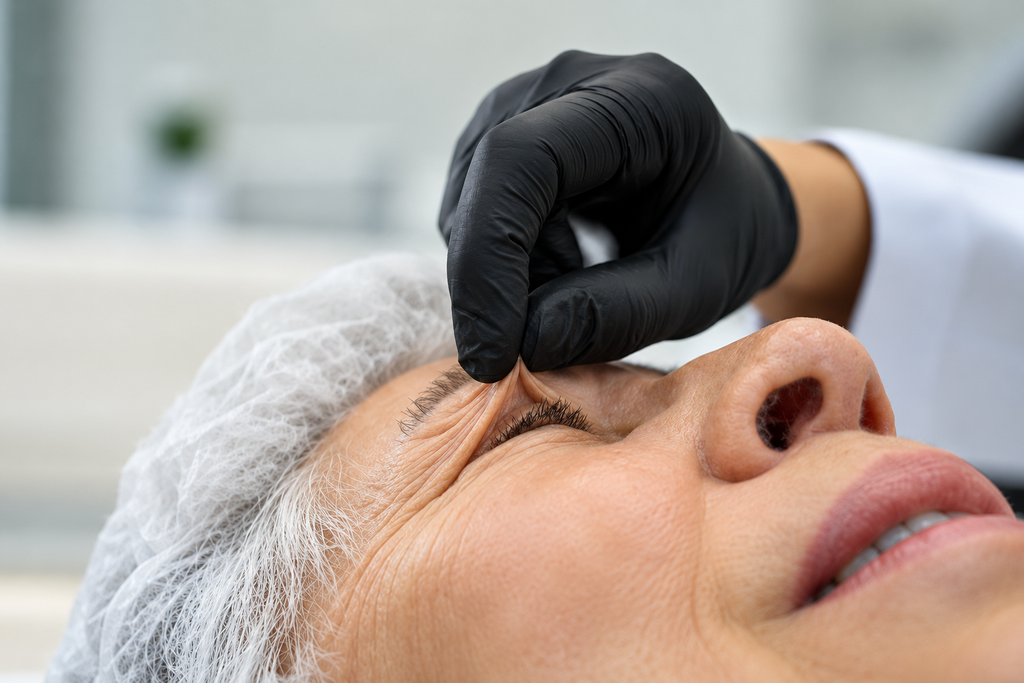
International patients can begin with an online evaluation. Clear photographs help the medical team study the eyebrows, forehead, eyelids, and facial balance before travel.
Useful photographs include:
- A relaxed front view
- Both side views
- Three-quarter views
- A close view of the eyes
- One photograph with the eyes gently closed
- One photograph with the eyebrows completely relaxed
The patient should not intentionally raise the forehead during the photographs. Heavy makeup, filters, unusual camera angles, or strongly lifted eyebrows can hide the true problem.
Medical Tourism in Albania helps coordinate consultations, treatment dates, accommodation guidance, airport transfers, and early follow-up in Tirana. Patients can review the available face and eye treatments in Albania before requesting an individual assessment.
Frequently Asked Questions
Is Blepharoplasty The Best Procedure For All Hooded Eyes?
No. It treats excess eyelid tissue but does not directly reposition a low brow. The cause of the hooding must be identified first.
Can A Brow Lift Remove Excess Upper-Eyelid Skin?
A brow lift can reduce some heaviness by moving a low eyebrow upward. However, it does not directly remove excess eyelid skin.
Can Brow Lift And Blepharoplasty Be Performed Together?
Yes, when both the brow and eyelid contribute to the problem. The surgeon must coordinate how much lift and skin removal are appropriate.
Will A Brow Lift Make Me Look Surprised?
A controlled lift should respect natural eyebrow position. An excessively high or poorly planned lift may create an unnatural expression, which is why facial proportions and brow shape must be assessed carefully.
Can Upper Blepharoplasty Change My Eye Shape?
It can change the visible eyelid contour. Excessive tissue removal may create an unwanted change, so conservative planning is important.
Which Procedure Has A Faster Recovery?
Upper blepharoplasty often involves a smaller treatment area, but recovery differs between patients. A combined procedure may require more time for swelling and bruising to settle.
Find the Right Treatment for Hooded Eyes✨
Hooded eyes should not be treated with the same operation in every patient. Medical Tourism in Albania helps you identify whether the real concern begins at the brow, the eyelid, or both areas.
📸 Send clear photographs for a free initial evaluation
👨⚕️ Receive a personalized recommendation from an experienced surgeon
👁️ Understand whether you need a brow lift, blepharoplasty, or both
✈️ Get support with appointments, accommodation, and airport transfers
📲 Stay connected throughout recovery and after returning home
Start planning your treatment in Tirana:
WhatsApp: +355 69 657 9999 or +355 69 625 1111
Phone: +355 45 627 297
Email: info@medicaltourisminalbania.com
👉 Contact Medical Tourism in Albania and receive a treatment plan designed around your eyes, brows, and complete facial balance.

 English
  Italian
  Albanian
  Spanish
  German
  Greek
Greek  French
  Dutch
Dutch  Polish