Revision rhinoplasty is a complex rhinoplasty that aims to correct problems from previous nose surgeries. This surgery requires special expertise and considerable experience from the surgeon who performs it.
In Albania, the number of patients that require revision rhinoplasty is higher due to previously unsuccessful operations. Surgeons in Albania are internationally trained to offer effective solutions for these delicate and challenging cases.
What Is Revision Rhinoplasty?
Revision rhinoplasty, also known as secondary rhinoplasty, is a surgical procedure that aims to correct issues of previous rhinoplasties. This procedure is more technically challenging than primary rhinoplasty due to anatomic changes and the development of tissues.
Differences Of Revision Rhinoplasty Compared To Primary Rhinoplasty
The revision rhinoplasty is significantly different from primary rhinoplasty. The anatomy has changed, there is less supportive tissue, and the risk of complications is higher
Main characteristics:
- The nose structures are now modified
- The soft tissues are less flexible
- Sometimes the use of additional grafts is required
- The surgery will last longer
- The revocery period might take longer
- An advanced surgical expertise is required
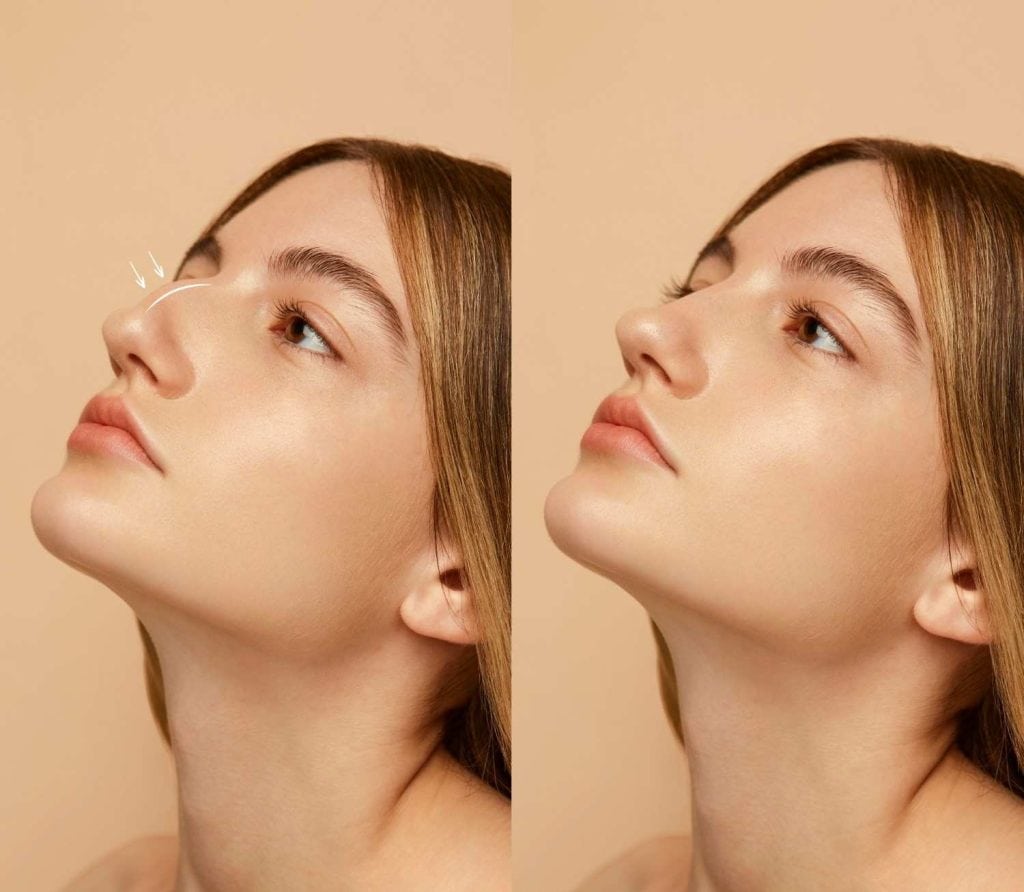
Cases That Require Revision Rhinoplasty
No, not every patient is completely satisfied with the results and needs revision rhinoplasty. You should wait at least 12 months for the nose to be completely stabilized before a second surgery is considered.
Issues that require correction:
- Upturned or crooked nose
- Too high or low nasal tip
- Asymmetrical nostrils
- Difficulty breathing
- Over-arching of the nasal bridge
- Collapse of nasal structures
- Visible or unsightly scars
- Non-functional aesthetic results
Reasons For The Need For Revision Rhinoplasty
There are many reasons why a rhinoplasty doesnt deliver the desired result. Some of them are related to the surgical technique, while others with the healing process
Technical Errors Of The First Surgery
Not having enough expertise or not properly planning the treatment can lead to weak results. The excessive removal of supportive structures is one of the most common issues that can require correction.
Technical errors include
- Excessive cartilage removal
- Lateral cartilage damage
- Incorrect graft positioning
- Inadequate tissue dissection
- Loss of structural support
- Uncorrected asymmetry
- Inappropriate technique for the case
Individual Healing Factors
Even with perfect technique, the healing period of each individual is unique. Some patients develop more capsule tissue or experience sudden tissue contractions.
The effect of biological factors:
- Excessive scarring
- Post-operative infections
- Soft tissue contracture
- Graft reabsorption
- Inflammatory reactions
- Genetic predisposition
- Skin and tissue quality
Not Communicating Properly
Sometimes, the results might be successful in terms of technicality, but don’t fit with the patient’s expectations. This often happens when the communication between the patients and the surgeon before the procedure is not clear.
Evaluation Before Revision Rhinoplasty
The consultation for revision rhinoplasty is more detailed and takes longer than the primary rhinoplasty. The surgeon will need to understand what went wrong during the first procedure and how it can be corrected.
Detailed Consultation
During the consultation, the surgeon will carefully take a look at your medical history and previous procedures. It is important to bring with you the whole documentation from the first surgery, including before and after pictures.
Other needed information is:
- Complete documentation of the first surgery
- Photograph before the primary surgery
- Photograph after the primary surgery
- Detailed surgical report
- Type of technique used
- Complications encountered
- Time since the last surgery
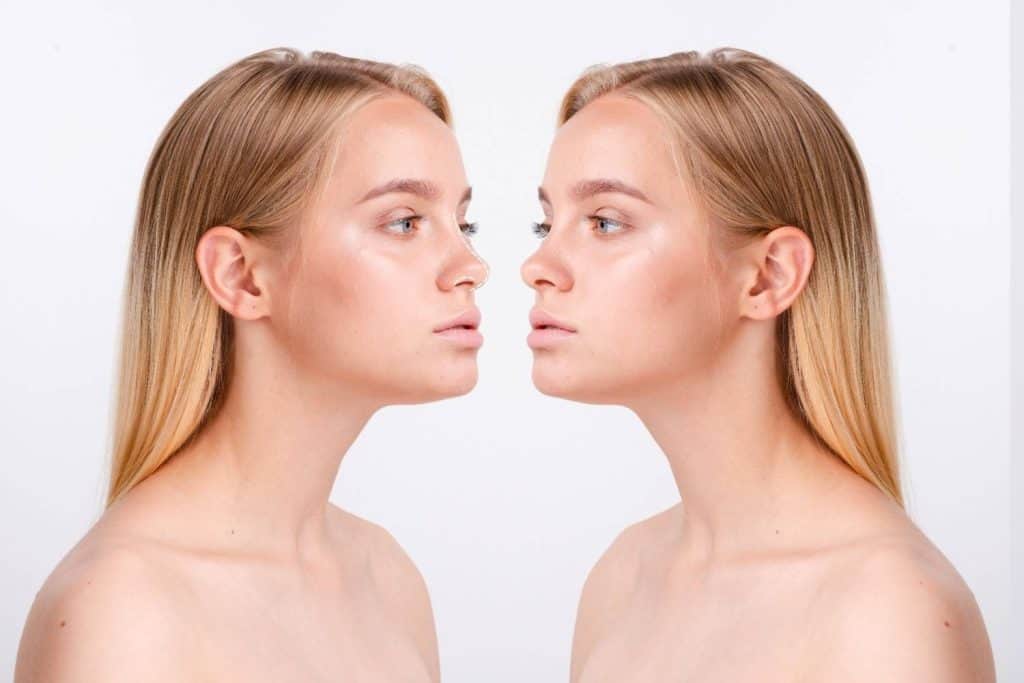
Detailed Physical Examination
The surgeon will carefully examine the outer and inner structures of the nose. This examination is essential to determine the extent of the damage and the surgical plan.
The examination includes:
- Inspection of the outer shape of the nose
- Palpation of cartilaginous structures
- Respiratory assessment
- Internal endoscopic examination
- Skin and elasticity assessment
- Dimension measurement
- Detailed clinical photography
Diagnostic Images
In many cases, diagnostic images are required to take a look at the inner structure of the nose. A CT Scan is especially useful for assessing the condition of the bone and septum.
The recommended examinations:
- CT scan of the nose and sinuses
- Specialized imaging
- Rhinoscopy
- Nasal endoscopy
- Breath analysis (if there are functional problems)
Revision Rhinoplasty Treatment Plan
Planning a revision rhinoplasty is a complex process that requires a lot of attention to detail. Each case is unique and requires a personalized approach based on the specific issues of the patient.
Defining The Goal
Together with the surgeon, you will determine real goals and expectations of the procedure. It is important to have realistic expectations because revision rhinoplasty comes with several limitations.
Achievable goals:
- Improving breathing function
- Correcting asymmetries
- Restoring structural support
- Improving the nose shape
- Straightening the bridge of the nose
- Balancing facial proportions
Choosing The Right Surgical Technique
There are two main approaches to revision rhinoplasty: open and closed. In most cases, the open technique is used for better visibility.
Open rhinoplasty:
- Offers amazing visibility
- The preferred choice for complex cases
- Leaves a small, invisible scar
- Allows precise placement of the grafts
Closed rhinoplasty:
- Doesnt leave scars
- Suitable for minimal changes
- Quicker recovery
- Limited visibility for the surgeon
- It is used rarely in revision cases
The Needed Materials And Grafts
Revision rhinoplasty often requires the use of grafts to restore nose structure and support. The grafts will be taken from the patient’s body to avoid the risk of rejection.
Sources of the graphs:
- Rib cartilage (most common)
- Auricular cartilage
- Septal cartilage (if remaining)
- Temporal fascia
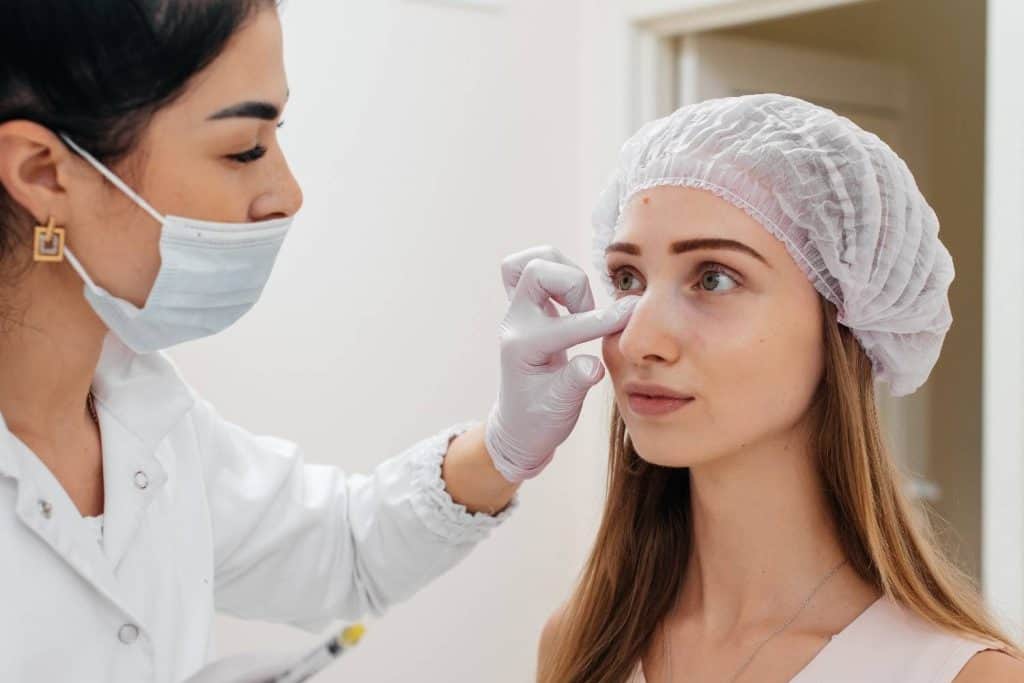
The Surgical Procedure For Revision Rhinoplasty
The revision rhinoplasty procedure is more complex and longer than primary rhinoplasty. The procedure will last about 3-5 hours, depending on the degree of correction needed.
The Administration Of Anesthesia
The procedure will always be performed under general anesthesia for patient comfort and optimal surgical control. The anesthesiologist will monitor your life signs throughout the whole process.
Opening And Evaluation Of Nasal Structures
Once the incision is made, the surgeon will carefully lift the skin and loosen tissues to expose the nasal structures. This is the moment when the degree of the damage becomes visible and the final strategy is planned.
The most common issues:
- Loss of supporting cartilage
- Septal deformities
- Internal scarring
- Structural asymmetry
- Displacement of previous grafts
- Soft tissue contracture
Reconstruction And Correction
The surgeon will carefully work to restore normal nasal anatomy. This can include the placement of new grafts, correcting asymmetries, and rebalancing the structures.
Correction techniques:
- Placing structural grafts
- Lateral cartilage restoration
- Deviated septum correction
- Nose tip remodeling
- Nostril balancing
- Strengthening weakened structures
Closing The Incisions
After making the necessary corrections, the tissues will be carefully placed, and the incisions will be closed with thin sutures. An outer bandage and inner tampons will be placed to support the new structures.
Recovery After Revision Rhinoplasty
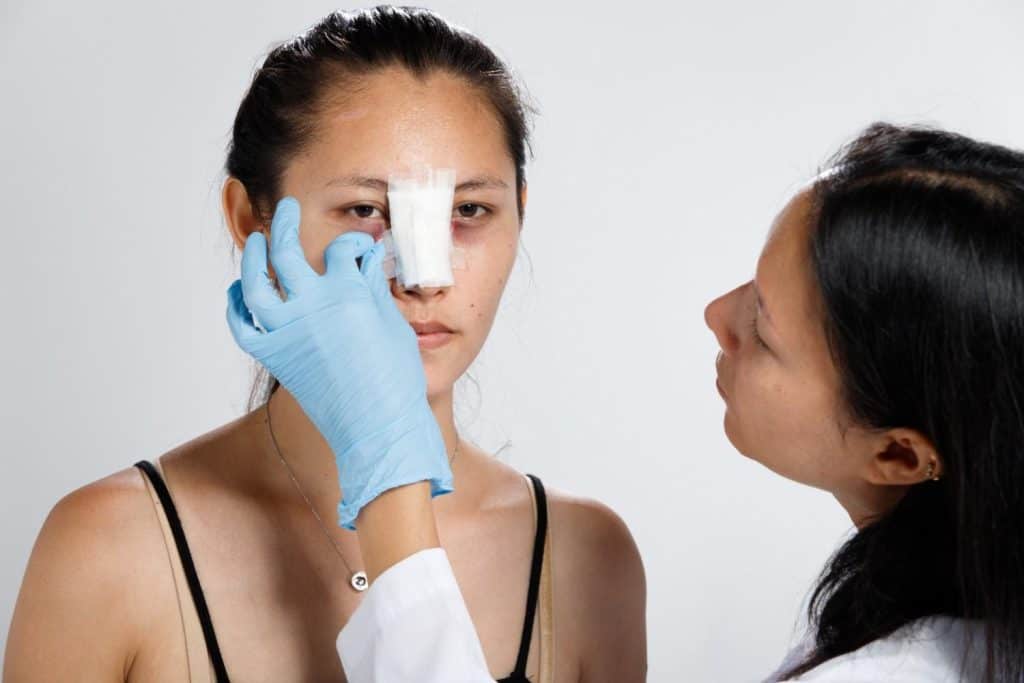
The recovery period after revision rhinoplasty is usually longer than after primary rhinoplasty. Patience and proper care are essential for optimal results.
The First Week After The Procedure
The first days after the procedure are the most challenging ones. Mild pain, swelling, bruising, and discomfort are all present. The head should be kept elevated even while sleeping to minimize swelling as much as possible.
Normal symptoms:
- Considerable swelling of the face
- Bruising around the eyes
- Blocked nose from the tampons
- Light to moderate pain
- Light bleeding from the nose
- Difficulties in mouth breathing
- Feeling tired and needing to rest
Removing The Tampons And The Bandages
The inner tampons will usually be removed after 24–48 hours, which brings immediate relief. The outer bandage and cast will be removed in 7-10 days, depending on the care.
- Inner tampons: 1-2 days
- Inner sutures: 7-10 days
- Outer bandage: 7-10 days
- Outer sutures: 5-7 days
First Months Of Recovery
Healing after revision rhinoplasty is a gradual process that can take up to 18 months. Patience is very important during this period.
Monthly progress:
- 1st Month: The swelling begins to decrease significantly
- 2-3 Months: The Initial shape of the nose becomes visible
- 4-6: Months of continuous improvement of the shape
- 6-12 Months: Gradual refinement of the nose shape
- 12-18 Months: The final results will be stabilized
Aftercare
During the recovery period, there are some activities that should be avoided to protect the nose as much as possible. Following these instructions is critical for the success of the procedure.
Activities you should avoid:
- Lifting heavy objects (4-6 weeks)
- Intensive exercise (6-8 weeks)
- Contact sports (3-6 months)
- Swimming (4-6 weeks)
- Exposure to strong sunlight
- Wearing glasses (6-8 weeks)
- Forcibly wiping the nose
- Forcibly blowing the nose
Expected Results

The results of a revision rhinoplasty depend on several factors, with one of the main ones being the degree of the initial damage. It is important to have realistic expectations because absolute perfection might not be achievable in every case.
Functional Improvements
In many cases, the goal of revision rhinoplasty is to correct breathing issues that can be a result of the first procedure. Most of the patients report a significant improvement of the nasal function.
Functional benefits:
- Breathing without difficulties
- Reducing snoring
- Improving sleep quality
- Reducing sinus infections
- Improving the sense of smell
- Eliminating nose dryness
Cosmetic Improvement
The cosmetic goal is to achieve the perfect balance between the nose with other facial features. While the improvement is the objective, absolute perfection is not always possible.
Realistic expectations
- Visible improvement of the nose shape
- Correcting main asymmetries
- Better facial harmony
- Natural and balanced result
- Minimal and hidden scars
- Improved self-esteem
When Will You Notice The Final Results
The nose will continue to change for months after the revision rhinoplasty. The final result should not be assessed before a year has passed.
The stabilisation time:
- 60% of the result: 3 months
- 80% of the result: 6 months
- 90% of the result: 12 months
- 100% stabilization: 18 months
Choosing The Right Surgeon For Revision Rhinoplasty
Choosing the right surgeon for revision rhinoplasty in Albania is a critical choice. You should look for a surgeon with specialized training and wide experience in revision cases.
The necessary qualifications
Look for a surgeon who specializes in plastic surgery and has performed various revision rhinoplasties. Specific experience in revision cases is essential.
Selection Criteria:
- Certification in Plastic Surgery
- Specialization in Rhinoplasty
- Documented experience in revision cases
- Portfolio with before and after photos
- References from previous patients
- Membership in professional associations
- Publications and presentations
- International training
Questions To Ask Your Surgeon
During the consultation, don’t hesitate to ask detailed questions. A good surgeon will be transparent and open with you.
Essential questions:
- How many revision rhinoplasties do you perform a year?
- What is your success rate?
- What are the specific risks of my case?
- How do you treat potential complications?
- What technique will you use in my case?
- How many surgeries do I need?
- What is your correct surgical plan?
Signs Of A Good Surgeon
Some signs can help you identify a trustworthy surgeon for revision rhinoplasty. Your intuition and comfort during the consultation are also important.
Positive qualities:
- Carefully listens to your worries
- Promotes realistic expectations
- Doesn’t promise perfection
- Transparently explains the risks
- Has a rich portfolio of revision cases
- Offers a detailed treatment plan
- Uses modern technology
- Has a qualified, supportive staff behind
The Cost Of Revision Rhinoplasty In Albania
Revision rhinoplasty will cost more than primary rhinoplasty due to its complex nature. However, the cost of cosmetic procedures in Albania remains lower when compared to Western countries without compromising quality.
Factors That Affect The Cost
The cost will depend on several factors, including the complexity of the case and the need for grafting. It is important to understand what is included in the final cost.
What is included in the cost:
- Surgeon’s fee (higher for revision cases)
- Anaesthetist’s cost
- Operating room fee
- Examinations and tests
- Grafts (if taken from ribs)
- Clinical stay
- Post-operative medications
- Continuous check-ups
Investing In Quality
While the cost is something to be considered, it should not be the deciding factor. It is better to pay more money for an experienced surgeon than to risk a third surgery in the future.
Why is this investment worth it?
- Higher chance of success
- Less risk of complications
- Less risk of additional procedures
- Stable results
- Better post-operative care
- Peace of mind
Possible Risks And Complications
Revision rhinoplasty comes with higher risks than primary rhinoplasty. This is due to the altered anatomy and development of the capsular tissues.
Possible Complications
Even in the hands of the most experienced surgeon, complications can occur. It is important to be aware of them before you decide to go through with the procedure.
Risks include:
- Prolonged swelling
- Continuous bleeding
- Infection
- Loss of grafts
- Septal perforation
- Changes in smell
- Not pleasant results
- The need for a third procedure
- Breathing irregularities
- Nose collapse (very rare)
Minimizing The Risks
Following the instructions carefully with significantly reduce the possibility of risks. Choosing the right surgeon is the most important preventative factor.
How to reduce the risks:
- Choose a surgeon with proven experience
- Follow all pre-/post-operative instructions
- Stop smoking for at least 4 weeks before
- Inform the surgeon of any medical conditions
- Take all medications as prescribed
- Attend all check-ups
- Report any unusual symptoms immediately
Non-Surgical Alternatives
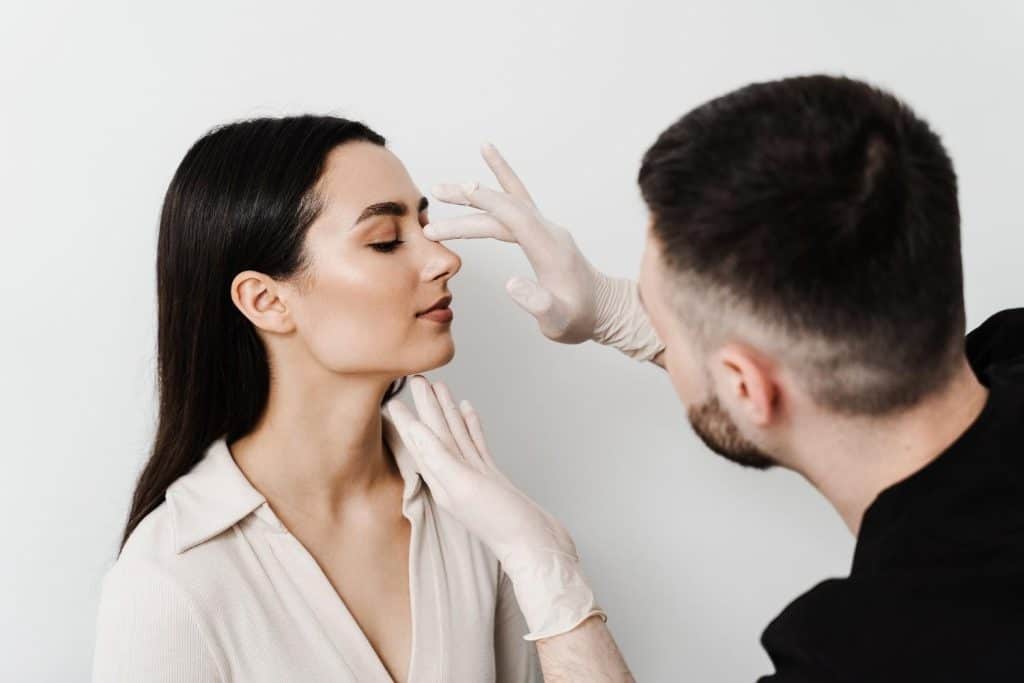
In some rare cases, non-surgical treatments can also improve some aspects of the primary rhinoplasty results. However, these effects are limited and cannot correct structural issues.
Nose Fillers
Hyaluronic acid fillers can hide some small defects of the nose. This is a temporary solution that can last 6-13 months.
Nose filler limitations:
- Only for minimal adjustments
- Temporary effect
- Cannot correct functional issues.
- Risk of vascular complications
- Higher cost, as it should be repeated every now and then
Tips For Optimal Results After Revision Rhinoplasty
The success of revision rhinoplasty will highly depend on the relationship between the surgeon and patient. Your commitment to the recovery process is critical.
Here are some important recommendations:
- Choose the best surgeon, not the cheapest
- Be patient during the healing phase
- Carefully follow all the post-operative instructions
- Don’t compare your progress to others.
- Keep an open communication with the surgeon
- Document the process with photos
- Don’t rush for a third procedure
- Take care of your health
In Conclusion
Revision rhinoplasty in Albania offers amazing possibilities for correcting previous unsuccessful procedures. With specialized surgeons and the use of modern technology, many patients will achieve the results of their dreams
The decision to go through with revision rhinoplasty requires careful consideration and a well-thought-out choice of the surgeon. While this is a bigger challenge than primary rhinoplasty, the results can be transformative for your quality and self-esteem when performed by the right surgeon.
If you are interested in learning more about revision rhinoplasty in Albania, contact Medical Tourism in Albania now!

 English
  Italian
  Albanian
  Spanish
  German
  Greek
Greek  French
  Dutch
Dutch  Polish