
Hair Transplant is not only about moving hair from one area to another. The position, shape, direction, and density of the new hairline can determine how natural the final result looks.
A perfect hairline should fit your face. It should also work with your existing hair, donor area, and possible future hair loss.
Why Hairline Design Is So Important
The hairline is usually the first part of a hair transplant that people notice. It frames the upper part of the face and connects the forehead with the rest of the hair.
Even a transplant with many grafts can look artificial if the front line is too straight, too low, or too dense. A smaller number of carefully placed grafts may create a better result when the design is planned correctly.
The goal is not to create a perfect line. It is to create a line that looks like it could have grown naturally.
What Specialists Examine Before Designing the Hairline
Hairline planning starts with a detailed assessment. The specialist needs to understand both the current condition and how the hair may change over time.
| Factor | Why It Matters |
| Forehead height | Helps determine a balanced starting position |
| Facial proportions | Guides the width, curve, and general shape |
| Existing hairline | Provides clues about the patient’s natural pattern |
| Temple areas | Connect the frontal line with the sides of the face |
| Hair direction | Determines how transplanted hair should be angled |
| Hair thickness and texture | Affects coverage and visual density |
| Donor area | Shows how many healthy grafts may be available |
| Age and future hair loss | Helps create a design that can remain suitable over time |
| Previous treatments | May affect the recipient or donor areas |
| Patient expectations | Ensures the proposed result matches realistic goals |
The Hairline Must Match the Face
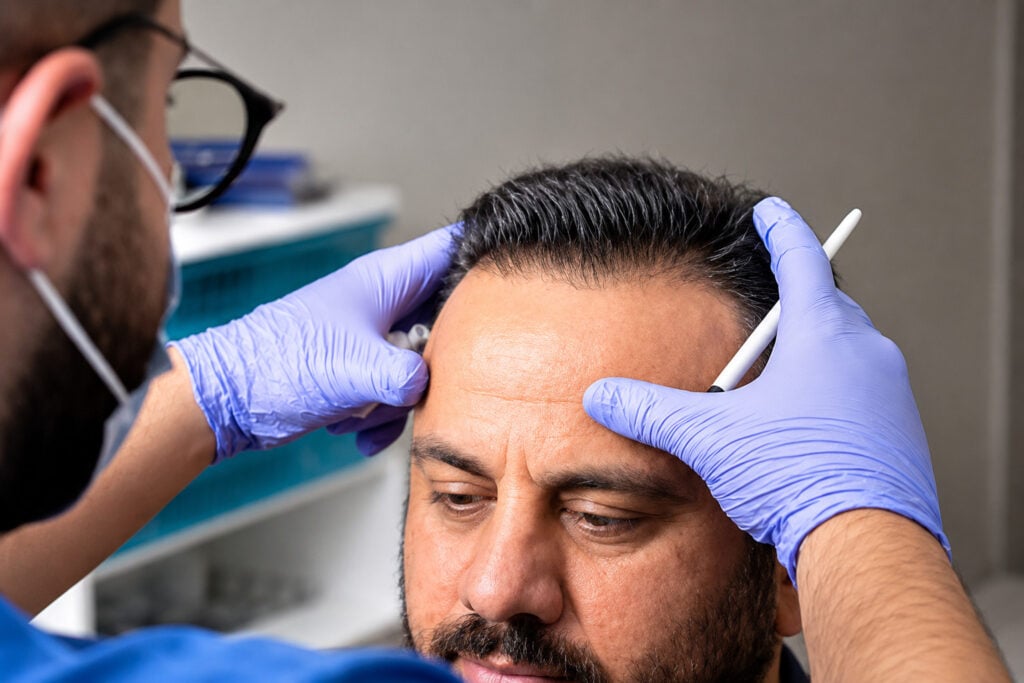
A natural hairline should create balance without becoming the main focus of the face. Its height and width need to work with the forehead, temples, eyebrows, and overall facial structure.
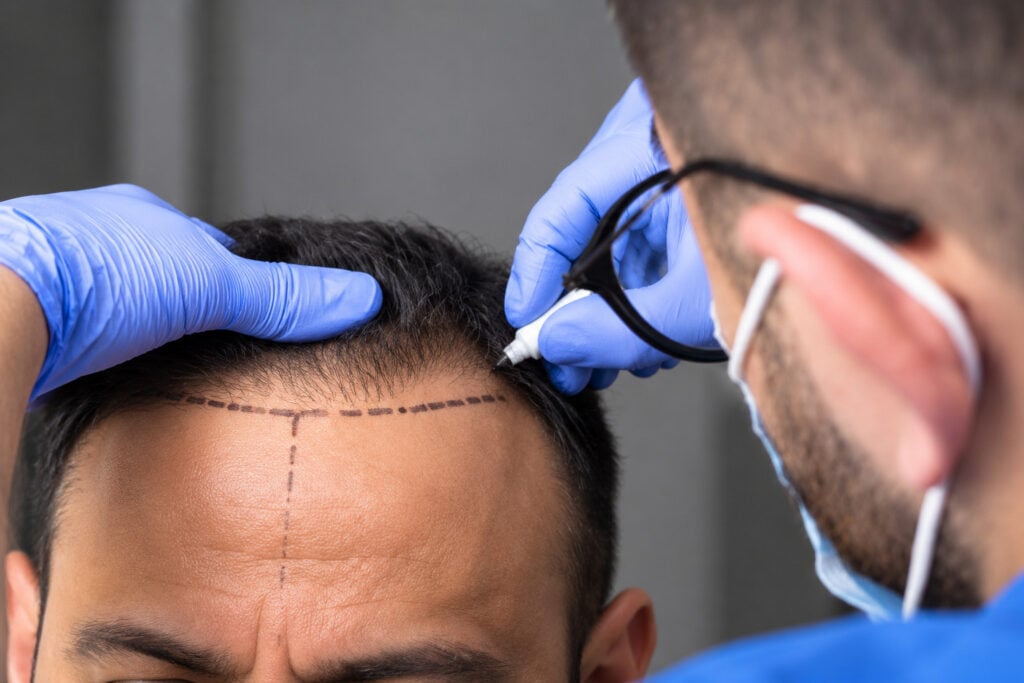
The specialist may place the central point first. This becomes the reference for the front part of the design.
The line is then extended toward the sides. Its curve should follow the patient’s anatomy rather than a fixed shape taken from another person.
The Lowest Hairline Is Not Always the Best Choice
Some patients ask for a very low hairline because they want to reduce the visible forehead. However, lowering it too much can use a large number of grafts and create an unnatural appearance later.
A low design also requires more density. This can place extra pressure on a donor area that has a limited supply of usable hair.
The specialist must think about the present result and possible future needs. A balanced position often offers better long-term planning than the lowest possible line.
Age and Future Hair Loss Affect the Plan
Hair loss may continue after a transplant. The transplanted grafts can remain, while untreated natural hair behind them may become thinner.
This is why the design should not only match the patient’s current appearance. It should also remain suitable as the person becomes older.
A very low or aggressive hairline may look acceptable at first but become difficult to support if hair loss progresses. Careful planning protects the available grafts for areas that may need treatment later.
The Donor Area Sets Important Limits
Hair transplant surgery redistributes existing hair. It does not create an unlimited new supply.
The donor area is usually located at the back and sides of the scalp. The specialist examines its density, hair thickness, stability, and available surface.
According to the International Society of Hair Restoration Surgery, donor hair does not grow back after it is removed. This makes responsible graft selection an essential part of the treatment plan.
A good design uses the donor supply wisely. It aims to improve the frontal area without weakening the back of the scalp or using grafts that may be needed in the future.
Natural Hairlines Are Not Completely Straight
Natural hair does not grow in a perfect geometric line. The frontal edge usually contains small variations in position, direction, and spacing.
During transplantation, specialists can create controlled irregularities along the front. These details help prevent the hairline from looking drawn or artificial.
The changes should be subtle. Large gaps or random placement do not create a natural result.
Single-Hair Grafts Create a Softer Front Edge
Hair follicles can grow in groups containing one, two, three, or more hairs. These groups are known as follicular units.
Single-hair grafts are usually selected for the first rows of the hairline. They create a softer transition between the forehead and the thicker hair behind it.
Grafts with more hairs can then be positioned farther back. This gradual change provides stronger coverage without making the front look heavy.
Hair Angle and Direction Matter
A graft must be placed in the correct position, but it must also point in the right direction. Hair that grows too upright or against the surrounding pattern may be noticeable after it becomes longer.
The specialist studies how the existing hair leaves the scalp. Recipient sites are then created with angles that follow this natural flow.
The direction may change between the center, sides, and temple areas. Careful control allows the new hair to blend more easily with the existing hair.
Density Should Increase Gradually
The first part of the hairline should not have the same density as the area behind it. A sudden wall of thick hair can make the result look unnatural.
The front usually begins with a lighter, softer transition. Density then increases as the design moves backward.
The number of grafts needed depends on several factors:
- Size of the treatment area
- Strength of the donor area
- Thickness of each hair
- Straight, wavy, or curly texture
- Contrast between hair and scalp
- Existing hair in the recipient area
- Desired coverage
- Possible future hair loss
Thicker or wavier hair may provide more visual coverage. Fine, straight hair may require a different distribution strategy.
The Temple Areas Complete the Design
The frontal hairline should not be planned as an isolated line. It needs to connect naturally with the temple areas and the sides of the scalp.
If these transitions are ignored, the center may look separate from the rest of the hair. The result can appear wide, incomplete, or poorly connected.
Not every patient needs temple restoration. The decision depends on the existing pattern, donor supply, facial structure, and treatment goals.
Hairline Design Is Different From the Transplant Method
Patients often focus on choosing FUE or DHI. These techniques can be important, but the method alone does not decide whether the hairline will look natural.
FUE hair transplantation describes how individual follicular units are collected from the donor area. The final appearance also depends on medical planning, graft selection, recipient site creation, and accurate placement.
A modern technique cannot correct a poor design. The specialist’s judgment remains one of the most important parts of the process.
How the Hairline Is Planned Step by Step
The process usually begins before the patient travels. Clear photographs can help the team make an initial assessment, although the final plan requires an in-person examination.
1. Online Evaluation
The patient sends photos of the front, sides, top, and donor area. Information about age, hair loss history, medical conditions, previous procedures, and treatment goals may also be requested.
This first evaluation helps the team understand whether a transplant may be suitable. It can also provide an early estimate of the treatment area and required travel days.
2. Scalp and Donor Examination
At the clinic, the specialist examines the hair and scalp closely. Donor density, hair thickness, growth direction, and signs of continued thinning are reviewed.
The initial online estimate may change after this examination. The final recommendation should always be based on the patient’s real condition.
3. Facial Assessment
The specialist studies the forehead, temples, existing hairline, and facial proportions. The goal is to find a position that creates balance without looking forced.
Old photographs may sometimes help show the patient’s earlier hair pattern. They are a reference, not a guarantee that the same line should be fully restored.
4. Drawing the Proposed Hairline
The proposed shape is drawn directly on the scalp. The patient can view it from the front and sides before the procedure begins.
This is the right time to discuss height, width, temple transitions, and personal preferences. The patient should understand and approve the planned design.
5. Planning the Graft Distribution
The medical team decides where single-hair and multiple-hair grafts will be placed. The plan also defines the change in density from the front toward the center of the scalp.
This stage connects the visual design with the available donor supply.
Common Design Mistakes That Can Make The Hairline Look Artificial
An unnatural appearance is often caused by planning and placement errors rather than the transplant method itself.
Possible problems include:
- A hairline placed too low
- A completely straight frontal edge
- The same density in every row
- Thick grafts placed at the front
- Incorrect growth angles
- Poor connection with the temples
- A shape that does not fit the face
- Excessive use of donor grafts
- Failure to consider future hair loss
- Copying another person’s hairline
A responsible specialist should explain when a patient’s request may not be suitable. Honest advice is an important part of safe treatment.
Can You Choose Your Own Hairline?
Patients should be involved in the design. They can explain what they like, what concerns them, and how they normally style their hair.
However, the final plan should be created together with a qualified specialist. Donor limits, scalp condition, facial proportions, and future thinning must be considered.
Photos of other people can help explain a preference. They should not be treated as an exact template because every patient has different hair and anatomy.
When Will the New Hairline Look Natural?
The appearance changes gradually after a hair transplant. Early shedding of transplanted hair can occur before new growth begins.
Visible growth usually develops over several months. The final texture, direction, and density need more time to mature, and complete results may take around one year or longer in some cases.
Recovery instructions can vary between patients and techniques. Following the clinic’s personalized guidance is more useful than following general advice found online. Patients can learn more about organized recovery in our guide to medical tourism aftercare planning.
Frequently Asked Questions
What Makes A Transplanted Hairline Look Natural?
A natural appearance depends on the hairline’s position, shape, small irregularities, density transition, graft size, and growth direction. It must also match the patient’s face and existing hair.
Is FUE enough To Guarantee A Natural Result?
No. FUE is a method used to collect follicular units. The result also depends on the medical team’s experience, the design, the recipient sites, and graft placement.
Should The Hairline Be Perfectly Symmetrical?
Not always. Human faces and natural hair growth have small differences between the two sides. The goal is visual balance rather than exact geometric symmetry.
Can A Hairline Be Lowered During A Transplant?
It may be possible in suitable cases. The decision depends on forehead proportions, donor supply, existing hair, age, and the risk of future thinning.
How Many Grafts Are Needed For A New Hairline?
There is no standard number for every patient. The size of the area, desired density, donor quality, hair thickness, and existing coverage must be assessed first.
Start Designing a Hairline Made for Your Face
Your hairline should not look copied, too straight, or out of place. It should follow your facial proportions, natural hair direction, and long-term needs.
At Medical Tourism in Albania, we make the planning process simple for international patients:
📸 Send your photos for a free online evaluation
🩺 Receive a treatment plan based on your individual case
💬 Ask questions directly before booking your trip
✈️ Get support with appointments, travel, and accommodation
📲 Stay connected with our team after returning home
Ready to discover what kind of hairline could suit your face?
👉 Contact Medical Tourism in Albania today and start planning your natural-looking hair transplant in Tirana.

 English
  Italian
  Albanian
  Spanish
  German
  Greek
Greek  French
  Dutch
Dutch  Polish